
Nurses Speak Out About Stress and Burnout and the Support They Need
Nursing leaders around the country share firsthand insights in roundtable discussion hosted by Aramark and AONL — and Aramark Healthcare+ shares innovative programs that support today’s caregivers.

Today, nearly 30% of registered nurses (RNs) are at risk of leaving their organization, according to a recent study. Healthcare systems are struggling to retain top talent during what may be the last straw—after 18 months of pandemic conditions.
To learn firsthand from nurses on the front lines, Aramark Healthcare+ organized a virtual discussion in partnership with American Organization for Nursing Leadership (AONL) to talk with nursing leaders from around the country. The nurses shared what it’s really like for them every day.
Here we share insights from the roundtable discussion and introduce the many ways Aramark Healthcare+ helps to care for caregivers.
Performing Non-Clinical Tasks
In today’s healthcare organizations, staffing issues are not only occurring within nursing departments, but also in many other departments, such as environmental services and dining services. Because these services are patient-facing, the extra work often falls to the nurses on duty. This takes valuable time away from performing direct patient care, which leads to being overworked, frustrated and burned out.

Nurses — In Their Own Words

"COVID exacerbated an ongoing problem. Early in the pandemic a lot of the tasks got pushed to nursing in order to conserve PPE and decreased exposure. So, we started delivering meals to patients and cleaning their rooms. As a result, nurses are not practicing at the top of their licensure. It kind of crept up until we lost track of how many different tasks we’re performing outside of clinical care."
— D.T., R.N.
"We’re all picking up more nonclinical tasks. If there’s a shortage in nonclinical support areas, it all falls back on us. We try to give and take on the pushback, but if there’s no dining staff on the weekends, for example, and nurses don’t feed them, the patients won’t get their meals."
— M.B., R.N.
"When dining services are understaffed, they rely on nurses to deliver meals. But our leaders recently asked us what non clinical jobs we’re engaged in. Now there’s going to be a push for not involving nurses in dining and environmental services and other services. Our organization is looking for opportunities to have nurses just focus on nursing care."
— L.M., R.N.
Pandemic Burnout
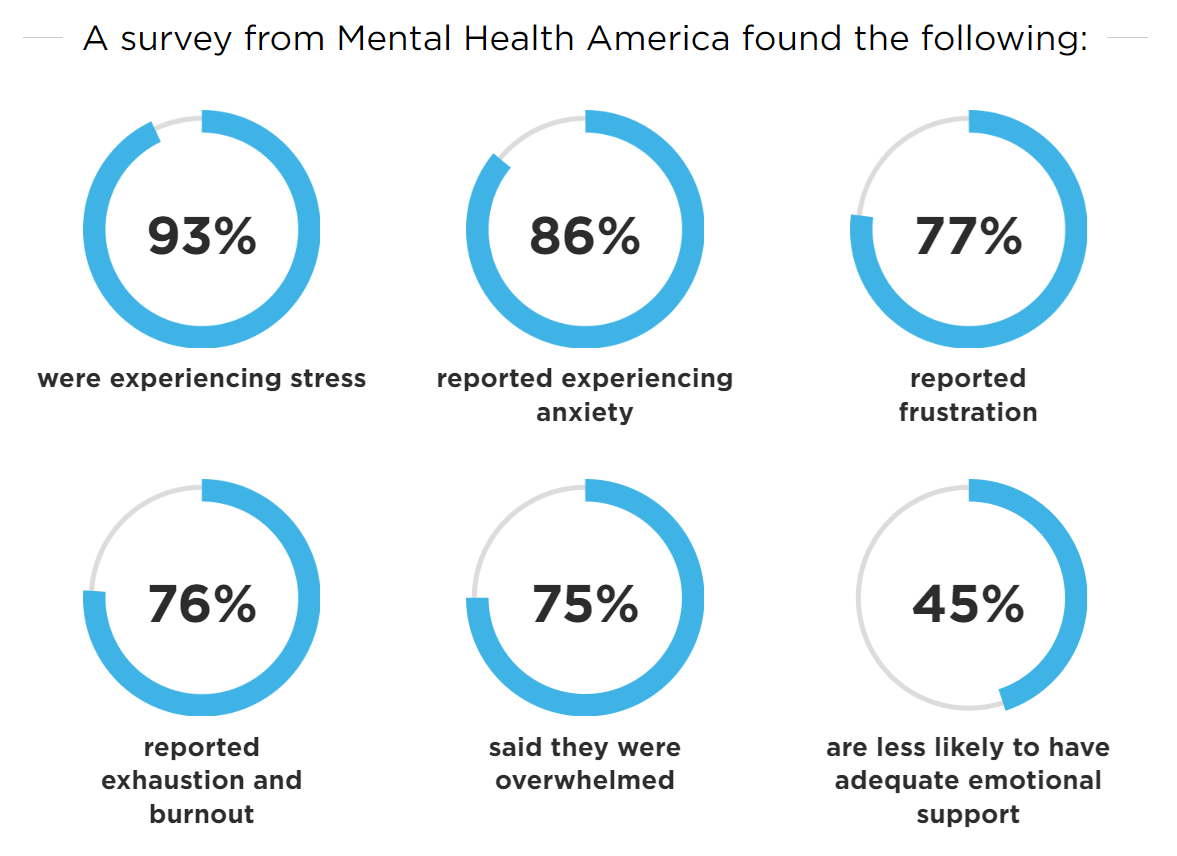
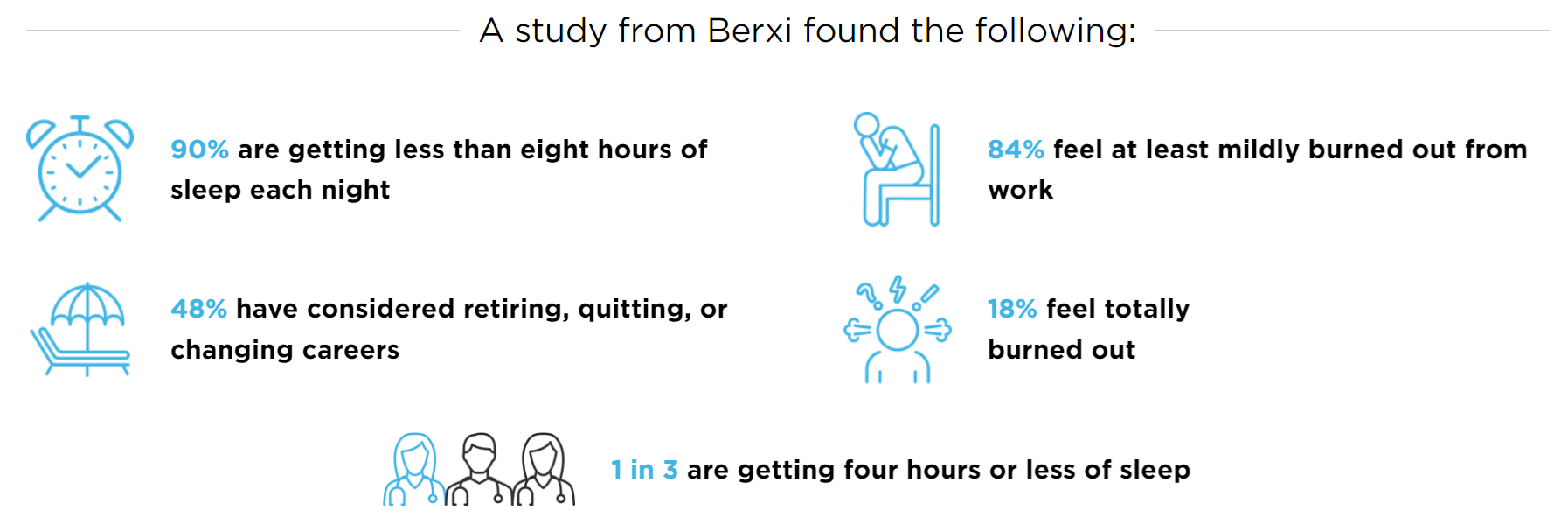
The pandemic crisis has taken a toll on nurses, according to two surveys. Stress, anxiety, frustration, burnout and feelings of being overwhelmed were the most common outcomes. Compounding the problem is that hospitals have been overwhelmed and short-staffed as the coronavirus has reached new peaks in many areas of the country, straining resources, and stretching the workforce thin.

Nurses — In Their Own Words
"Nurses get judged or sometimes coached because we didn’t finish our documentation, didn’t get to the desk, didn’t hang the blood on time, or give the antibiotic on time. COVID has exacerbated the situation, but still, nurses are expected to do so much when we simply don’t have enough hours in the day. It’s a stressor for many nurses."
— O.R., R.N.
"It’s important for us to figure out how we’re going to take care of the patients in this new normal because things that we used to do for them, we can’t do anymore. Things that we would love to be able to do, we just can’t. What we must do now is not what nurses are used to; it’s not what we learned; it’s not what we’ve done our whole careers. And that’s challenging."
— R.T., R.N.
"Nurses have always faced a struggle between wanting to offer psychosocial support to patients but feeling that they don’t have enough time to do it. COVID has compounded our struggle to no end. This has really ratcheted up that stressor quite a bit."
— M.B., R.N.
National Nursing Shortage Created Unbalanced Supply and Demand BEFORE the Pandemic
A shortage of RNs is expected to spread across the country between 2016 and 2030 just as Baby Boomers age and the need for healthcare grows:
- The number of nurses leaving the workforce each year has been growing steadily from 40,000 in 2010 to nearly 80,000 by 2020 — and more than 1 million nurses are projected to leave the workforce by 2030.
- As tenured nurses retire, novice nurses enter the workforce creating an experience gap in caring for patients with complex diseases and conditions, which leads to increased patient acuity.
- Changing demographics signal a need for more nurses to care for an aging population.
Sources: Advisory Board, American Association of College of Nursing (AACN), U.S. News

Understaffed Nursing

Understaffing in healthcare organizations is endemic. When facilities have inadequate levels of registered nurse on shifts it impacts patient care — including gaps in quality, safety and service. Many studies point to the connection between adequate levels of registered nursing staff and safe patient care delivery such as:
- Higher patient loads are associated with higher readmission rates
- Lower patient-nurse ratios on medical and surgical units are associated with significantly lower patient mortality rates
- Link between baccalaureate-prepared nurses to lower mortality and failure-to-rescue rates
- Increases in registered nurse staffing associated with reductions in hospital-related mortality and failure to rescue as well as reduced length of stays
Nurses — In Their Own Words
"Due to the challenges we face with the ongoing nurse supply and demand, the one thing you hear from staff is about the missed patient care opportunities — whether that’s just being present, communicating with patients or taking extra care during rounds. We have so many different competing priorities fighting against our ability to deliver those extras to patients."
— T.G., R.N.
"We’ve certainly seen a degradation in our nursing staff. We’ve lost about 40% of our nurses in this market to travel agencies and retirement. We’ve recognized that we’re not going to be able to recruit enough nurses to be able to fill all the positions."
— L.M., R.N.

"We had issues during the fourth COVID spike because we did not have the staff to do what we were doing before. Everyone else had left. Our facilities had to reassign the duties among all clinical staff members to help fill the gaps."
— R.S., R.N.

Prioritizing Nurse Satisfaction — Caring for Today’s Caregivers
With today’s nurses stressed, burned out and thinking about leaving their professions, it’s time to prioritize nurse satisfaction. By creating a collaborative and supportive culture, hospitals can improve workplace morale and build a more satisfied, engaged nursing team.
- A study by the National Institute of Nursing Research found an overall decrease in patient satisfaction in hospitals where nurses work more than 13 hours a day.
- When nurses reported a 25% increase in job enjoyment over a two-year time frame, the overall quality of patient care increased between 5% and 20%, according to AMN Healthcare.
- When nurses have access to fast, healthy meals nurses returned from meal breaks happier and delivered better patient care, according to an Aramark study.
How Aramark Healthcare+ Supports Nurses — Our Innovative Programs
As a trusted partner at many hospitals and health systems, Aramark Healthcare+ has seen firsthand what nurse stress and burnout looks like. When nurses are spread too thin, patients suffer. When quality, safety and service suffer, patient satisfaction scores almost always suffer as well.
Partnering with Aramark Healthcare+ provides healthcare organizations with access to a wide range of support tools that help ease the burden on nurses — as well as elevate patients’ experience.
Adopt-A-Floor — Nurse Engagement and Collaboration Tool
Aramark Healthcare+'s Adopt-A-Floor creates an environment that engages and collaborates with nurse leaders and gives them a unique approach to focusing on units, departments and their staff. Nursing leadership rounds allow the teams on the ground to have their finger on the pulse of unit operations, challenges and opportunities. It calls out service recovery needs, recognition for all staff that touch the patient, and allows for innovation and collaboration to solve problems at the unit level and share best practices.
"The Adopt-a-Floor program made a real impact at our facility. By rounding with our nurse managers daily, any patient complaint is dealt with immediately and completely. Better yet, it led to a process change that has improved the quality of interaction between patients and dietary services staff, and freed up more of my team’s time to deliver care."
— Nurse Manager of 4D Medical and ICU Units, Main Line Health
PatientConnect — Mobile Rounding Platform
This is a cutting-edge, patient-focused mobile scoring technology that delivers real-time insight that enables hospitality team members to monitor patient satisfaction and take proactive measures to elevate the patient experience. Through Aramark Healthcare+'s mobile rounding platform, dining, EVS and transport staff proactively round on patients to assess and validate work related to patient-facing programs, thereby eliminating extra work for clinical staff. Proactive Service Recovery is built into the mobile technology to automatically escalate any issues encountered in real time. Through insight-driven data, PatientConnect monitors satisfaction levels, and becomes a leading indicator to predict performance and provide proactive service recovery.

No Pass Zones — All-Hands Patient-Centered Support
No Pass Zones started as a multi-disciplinary patient experience initiative. Now it has expanded to have an impact on quality and safety as well. By supporting the concept of "no call-light should be ignored or passed by," staff members do not continue to pass by a patient’s room or someone in need of help without stopping to assist. Clinical issues are referred back to the care team, but often greater than 50% of the issues are non-clinical and can be handled on the spot. Aramark Healthcare+ teams have intervened in numerous instances where critical changes in condition or safety issues were spotted in time.
Ambassador Support — Assistance with Patient Needs
A patient ambassador is a nonclinical individual who provides personal care for patients in a hospital. Their duties include providing hospital information, providing emotional support, and relaying any issues to nurses or other medical staff. Patient Ambassadors create lasting impressions with patients and foster a warm, friendly and positive atmosphere, while assisting nursing staff with patient needs. This frees up nurses, so they have more time to focus on clinical matters.
Recognition and Reward — Employee Encouragement and Support Tool
Aramark Healthcare+'s manager and employee recognition platform acknowledges managers who perform their jobs according to a hospital’s values. The program creates opportunities to celebrate and encourage stellar work from nurses and other staff members — especially work that enriches and nourishes patients’ lives. For example, managers can take every opportunity to say “thank you” to team members for a job well done.
Reports show there is a 5% to 20% increase gained in overall quality of patient care when nurses report a 25% increase in job enjoyment.
Dining Services — Satisfying Meal Breaks
Aramark Healthcare+ has designed innovative dining services in healthcare settings to meet the specific needs of nurses — including giving them fast and easy access to healthy and customizable dining options on-site and to take home. Our successes in this area include MainLine Health, where nurses reported feeling happier and able to deliver better patient care after a satisfying meal break.
- 88% of nurses say good food has a positive impact on their mood.
- 96% of nurses reported their stress levels dropped after using the employee “renewal room” installed by their hospital.
Our dining innovations include:
- Digital pre-orders and pickups
- Pop-up grocery stores
- Grab-and-go kiosks
- 24/7 autonomous markets
- Private respite spaces in cafes
- Concierge services
- Take-home meals and produce boxes
We are here to serve your unique needs
Contact us today. You have a lot to gain.

