Minimizing waste through prevention, recovery, and recycling
Reducing food waste conserves resources, improves our environmental footprint, and promotes food security.
As a U.S. Department of Agriculture Food Loss and Waste 2030 Champion, we are committed to reducing food loss and waste in our U.S. operations by 50% by 2030 from our 2015 baseline.
We also signed the Pacific Coast Food Waste Commitment in 2022 and the U.S. Food Waste Pact in 2023, joining partners World Wildlife Fund (WWF) and ReFED. Pilot projects through these partnerships collected more than 750 frontline worker ideas, achieved more than 50% food waste reduction on average, and saw a 55% reduction in food waste at events through the first low-waste events pilot.

Food management process measures up
We aim to minimize waste through a holistic food management process from planning and purchasing to production and service.
Knowing that what gets measured gets managed, all our foodservice locations are tracking food waste using a variety of methods, including hundreds of our largest accounts that have transitioned to a technology-based solution for tracking waste. Tracking waste enables better decisions about what to purchase and how much to prepare.
In partnership with our clients, we reduce food waste across back‑ and front‑of‑house operations through operational improvements, right‑sized portions, and targeted education and behavioral interventions that drive measurable impact at the point of service and on the plate. We implement composting programs in many locations to divert waste from landfills, when possible.
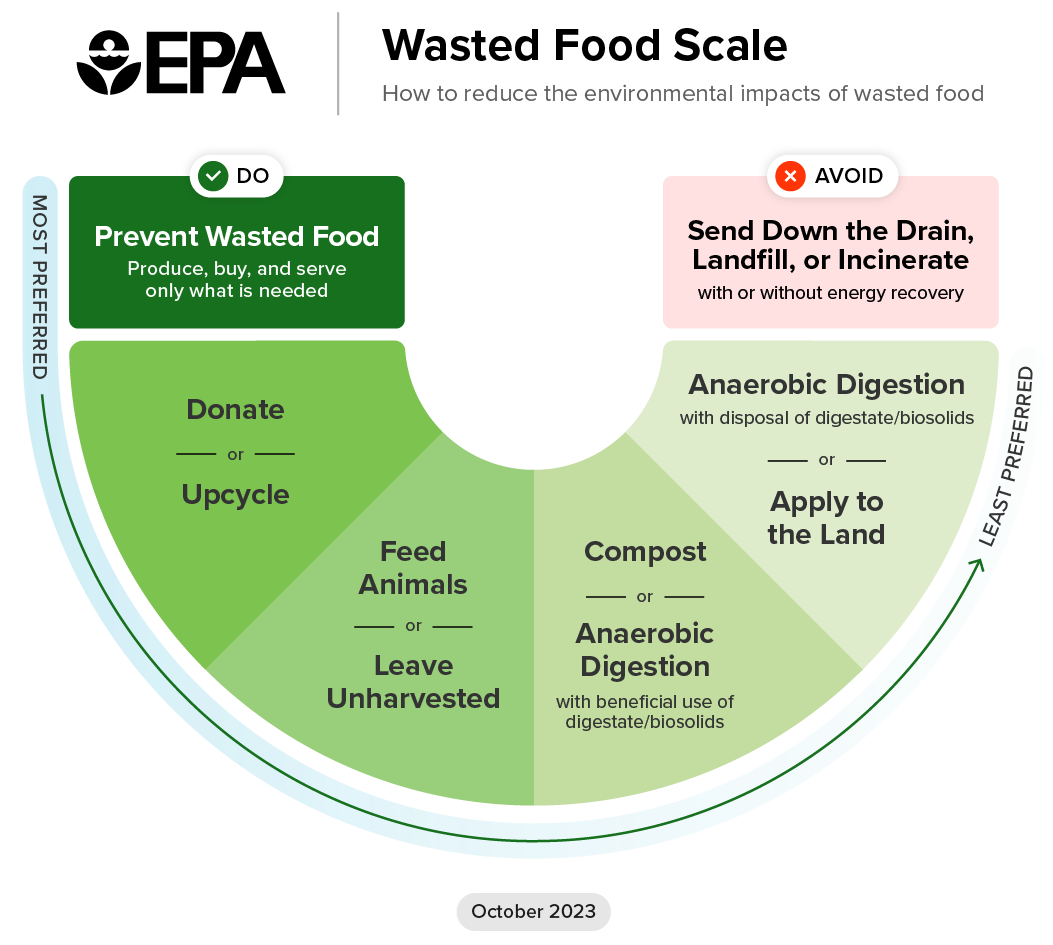
Prevent Waste Food: Aramark's Food Management Process focuses on prevention every step of the way and uses waste tracking to take action on waste hot spots.
Donate: In instances where our operations have excess, safe-to-eat food, we aim to provide this food to local hunger relief agencies.
Upcycle: Our chefs find creative reuse opportunities in the kitchen or purchase products made from upcycled ingredients.
Compost: At some locations where infrastructure is available, we partner with clients and local companies to participate in composting programs. This waste diversion creates compost to enhance soil health, replace chemical fertilizers, increase moisture retention in soil, and reduce methane.
Feeding our communities
Although our goal is always to eliminate food waste before it is generated, there may still be instances when our operations have excess, safe-to-eat food available. Our food donation program provides this food to hunger relief agencies.
We donate thousands of pounds of food each year to non-profit organizations, which helps feed people in our communities and keeps surplus prepared food out of landfills.
Water stewardship
Aramark aims to minimize water usage at the locations we manage. We prevent excessive water use by monitoring leaks, installing faucet aerators, and more. Through ongoing operator training, we can reduce stress on this precious natural resource.
For example, Aramark Destinations installed 100 water meters across the Yosemite National Park property in fiscal year 2025. The project created a foundation for ongoing monitoring via monthly usage reports. This helped identify a significant leak at Yosemite Valley Lodge – more than 100,000 gallons of water lost daily. We repaired the leak, leading to savings of more than 53 million gallons per year.
Find out more about us.
Check out the latest updates, innovations, and headlines from around the world.