Facilities Trends for 2024
Campus facility management insights and innovations to turn today’s challenges into tomorrow’s
Higher education is at a crossroads. The lingering effects of the pandemic, the looming enrollment cliff, shrinking budgets and deficits, labor shortages, shifting public sentiment and a host of other pressures have created a difficult operating environment. Universities, colleges and other learning institutions must be more adaptable and nimble than ever before.
Emerging from these waves of changes is another story: one of resilience, innovation and a steadfast commitment to student success. As higher education reimagines physical learning environments and responds to bigger-picture market shifts, facility management solutions are gaining in importance.
Now, more than ever, the spaces and environments on campus are blueprints for the future. Reimagining how those spaces are managed, cleaned and leveraged is not only an imperative for the well-being of the academic community, but a fundamental step towards shaping educational landscapes for generations to come. This guide uses the collective insights and thought leadership of our Aramark team to reveal the top trends of the coming year and how they each impact the future of facilities management for higher education.
Trend 1
Budgets Tighten Across the Board
Rising expenses and falling revenue represent the perfect storm for financial chaos. Both public and private institutions are closely examining budgets, as the costs of labor, energy, products, and services continue to rise amid global inflationary pressures and economic volatility. At the same time, student enrollment has taken a nosedive in past years and is predicted to continue declining by an additional 15% starting in 2025 due to the shrinking college-age population.
Across the board, institutions are facing significant budget deficits and making hard choices about where to save – be it faculty and staff, academic programs, research grants, facilities budgets or some or all of the above.
As just a few examples of a long list:
- The State University of New York (SUNY) is working to address a $9 million budget deficit by cutting faculty and staff positions and eliminating 14 degrees from its academic catalog.
- West Virginia University has a $45 million budget deficit and announced that more than 140 faculty positions will be cut, in addition to merging or closing more than a dozen academic programs.
- California State University (CSU) is facing a $1.5 billion budget deficit and plans to increase tuition by six percent every year over the next five years.
- Rutgers University has a $125 million budget deficit that the institution plans to tackle over the next three years through structural reforms, cuts and increased revenue.
- The University of Nebraska-Lincoln is facing a $13 million budget deficit and trying to avoid raising tuition fees by controlling expenses and dipping into reserve funds.
While tuition hikes and faculty cuts make headlines, the impact of these deficits on facilities and operations does not go unnoticed. From deferred maintenance to reduced capital investments to constrained resources, the pinch has already been felt for decades, but can no longer be ignored. Finding ways to optimize operations and reduce costs has always been a priority for facilities management teams, but in 2024 it will be paramount.
Trend 2
Tackling the Liability of Excess Space
Space is expensive. Between maintenance, heating, cooling and cleaning, the costs add up. And with fewer students and hybrid learning, significantly less space is being used than before. Past decades of expansion to attract students and accommodate large-scale programs have now created a space liability.
Combined with the growing backlog of deferred maintenance, reducing gross square footage is an attractive option to cut costs at a growing number of institutions. It’s not easy, but it is effective. Less space to maintain means a reduction in the total cost of ownership. Closing or removing buildings also reduces the backlog liability of deferred maintenance.
It’s a strategy some institutions are embracing by either selling, demolishing or divesting property to reduce costs and reinvest the proceeds.
- The University of Missouri is eliminating about 10 percent of its footprint — more than one million square feet — through a combination of demolishing and divestment. The reduction is expected to lower the current $800 million in facility needs by a quarter and free up an additional $8 million in operations costs, funds which will then be reinvested into existing facilities.
- The University System of Georgia is selling notable assets, including the institution’s President’s House, because the operational costs and challenges have become too high. The proceeds will be reinvested in other student success programs.
- Lincoln University sold its flagship downtown campus building in Oakland, CA as part of a move to generate cash flow, increase operating capital and compensate for the reduction in student enrollment.
Rethinking an institution’s footprint is one way of reducing costs and operational needs. Fortunately, buildings don’t necessarily have to be sold or demolished – they can also be temporarily decommissioned to save money.
Downsizing physical space is becoming increasingly attractive for institutions grappling with the need for increased cash flow and reduced operating costs, but it’s not the only way to be more strategic about how campus space is used — or not used — in 2024.
Trend 3
Leveraging Space Utilization Data Is Essential
Large amounts of campus space are underutilized every day. The reality is that higher education rooms, offices, entire buildings and other amenities never see, and never saw, 100 percent occupancy. Now, it’s even lower with more students learning virtually and faculty working hybrid schedules. Our experience shows that, on average, only about 60% of space on campuses is used daily. That leaves a full 40 percent of space that is either untouched every day or underutilized.
Data-driven insights that inform about how and when campus space is used unveil opportunities to improve efficiencies, saving time and resources. For this reason, it’s attracting great attention from higher education and facilities leadership. Measuring and tracking space utilization data support strategic, data-backed decisions about service schedules, energy usage, heating and cooling needs, space allocation and more.

The benefits of strategic facilities decisions backed by space utilization data include:
- Identifying cost savings
- Driving operational efficiencies
- Improved scheduling of staff
- Long-term planning with trending data
- Flexibility to optimize resource allocation
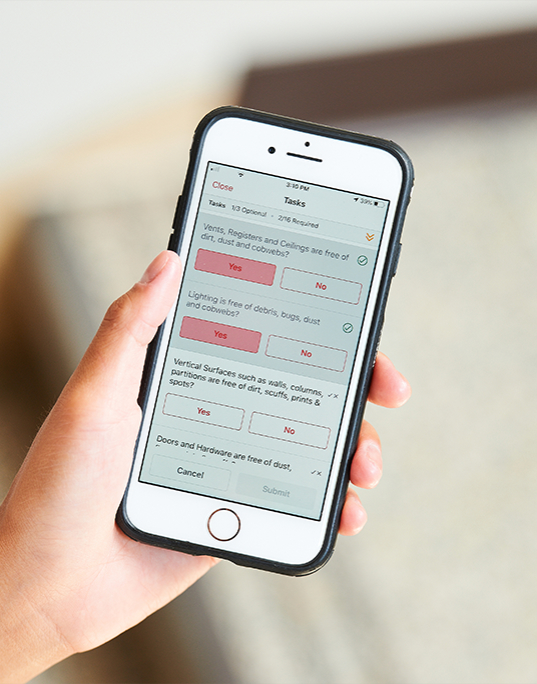
For instance, Demand-Driven Cleaning is emerging as the top approach to custodial services in 2024. One-size-fits-all cleaning schedules no longer fit the realities of how academic spaces are being used — if only 60% of classrooms were used in a day, why schedule a full team to clean all of them? Instead, institutions are increasingly leveraging real-time occupancy and usage data to rethink cleaning practices.
The immediate cost savings of avoiding unnecessary custodial and maintenance work are one benefit of actionable space utilization. But there’s another layer that makes it all the more critical to institutions right now: it increases staff productivity.
Many institutions have not returned to pre-pandemic staffing levels, either due to labor shortages or funding limitations — both of which are expected to continue. Remaining staff are being asked to do more with less, potentially leading to less clean spaces and poor morale. However, demand-driven cleaning enables institutions to maintain standards with existing staff by strategically informing where service is most needed. The result is a modern and data-driven approach to service delivery.
Trend 4
Tech-Forward Solutions Take Precedence
It’s not just space utilization data and strategic custodial services that are emerging as game-changers for higher education facilities management. Tech-forward, innovative solutions will be embraced for most facilities issues in 2024, from basic maintenance to risk mitigation.
The list of leading-edge technologies being adopted and deployed across campuses is extensive, including:
- IoT sensor and system networks that provide real-time data on equipment condition and performance
- Drones to assess and manage difficult-to-reach spaces, like roofs or windows
- Autonomous vehicles (robots) for cleaning
- Touchless occupant service requests
- AI tools to enhance the workforce and improve facilities management
- Digital twins of spaces that accelerate daily service delivery and long-term planning
There are two parts to this trend towards leveraging technology in higher education maintenance and facilities management.
1
For one, the growth in big data and analytics has changed what’s possible in terms of data-informed decision-making and reporting. Smarter buildings lead to better decisions that have a real impact on an institution’s bottom line. Sensors can now prevent major water damage by immediately detecting a water leak, avoid program disruption by identifying mechanical equipment near failure, or prevent losing valuable research or perishables through refrigeration monitoring. Indoor air quality monitoring enables healthier, more optimal learning environments and better energy management. The possibilities truly are endless.
2
On top of that, quick response times to service requests are becoming a standard expectation among students and staff. Smart technology and strategic sensor placements provide a nuanced understanding of the dynamics of building usage, enabling a more proactive approach to cleaning, maintenance, and environmental control. Faster response times enable higher customer satisfaction.
It’s not just the technology itself that universities are using that has evolved – it’s their very approach to deploying tech-forward facilities management solutions. Increasingly, institutions are partnering for expertise. Keeping pace with technological innovations in facilities management is a must, but few institutions can afford an in-house team continually focused on facilities management research and development.
Instead, working with a provider that offers access to a dedicated R&D team removes the barrier of entry to deploying leading-edge solutions. For example, Aramark has a dedicated Center of Excellence specifically designed to identify new and innovative solutions for campus facilities challenges, meaning that institutions can stay on the forefront of industry advancements while remaining focused on their core mission.
Trend 5
Enter the Era of Digital Twins
While there are numerous opportunities to optimize how institutions operate thanks to technological advancements, one innovation in particular stands out for 2024: digital twins.
A digital twin is a virtual model of something physical: an object, room, piece of equipment, build environment or system. That concept itself isn’t groundbreaking — versions of digital twinning were initially used by NASA during space missions and are now popular for virtual tours of properties listed for sale. What is new, however, is the way digital twins are being used in higher education. Digital twinning is quickly emerging as a transformative force in campus facilities management.
The technology enables facilities managers to gain comprehensive insights into the performance and status of campus infrastructure and systems, offering a holistic, virtual view of every inch of campus space.

At its core, digital twinning involves creating dynamic, digital replicas through scans of physical assets, spaces and systems on a campus. Those scans are then transformed into 3D models and 2D floor plans. Having accurate virtual models that can be remotely accessed brings a host of benefits, including:
- Remote monitoring with real-time data
- Enhanced decision-making
- Improved staff training
- Comprehensive asset information
- Precise measurements that can be taken remotely
- Improved pre-service insight
- Maintenance and service efficiencies
- Virtual assessments of space
- Strategic predictive maintenance
In addition, digital twin solutions can often be integrated with other facilities management tools, such as a CMMS and/or an IoT sensor platform to provide even greater insights, improved service delivery and better planning decisions. From optimizing space planning and enabling improved maintenance to offering virtual tours of campus spaces and research facilities to attract research faculty, staff and students, digital twinning is emerging as one of the most exciting, leading-edge technologies for higher education facilities management.
Trend 6
Sustainability Remains in the Forefront
Higher education will continue to be expected to take a leadership position in sustainability. Nearly three-quarters of students consider the institution’s commitment to the environment before deciding to enroll. Sustainability remains an important value proposition when recruiting and retaining students.
Already, numerous universities have significantly reduced their carbon emissions or achieved carbon neutrality. The Princeton Review publishes an annual Guide to Green Colleges and the 2024 edition lists 522 institutions that are deemed environmentally-responsible (out of 680 that were reviewed). On top of that, hundreds of campuses have signed a climate pledge from Second Nature, an organization committed to accelerating climate action through these institutions. The College of the Atlantic in Maine, the first carbon-neutral college, has committed to becoming fossil fuel–free by 2030.
Facilities management is one of the driving forces behind making those promises a reality. Sustainability-related policies and practices can help reduce emissions in direct operations and supply chains. Sustainable solutions, including LEED (Leadership in Energy and Environmental Design)-certified buildings and spaces, can help minimize a university’s carbon emissions while still considering total cost of ownership. Data-driven energy management solutions can also reduce energy consumption and improve operational efficiencies.
It’s not just the external environment that students care about – the institution’s own conditions and indoor air quality also matter. Indoor air pollutants pose a significant health risk, especially given that students and faculty spend many hours of the day indoors. In fact, the U.S. Environmental Protection Agency estimates that concentrations of pollutants indoors can be two to five times higher than outdoor levels.
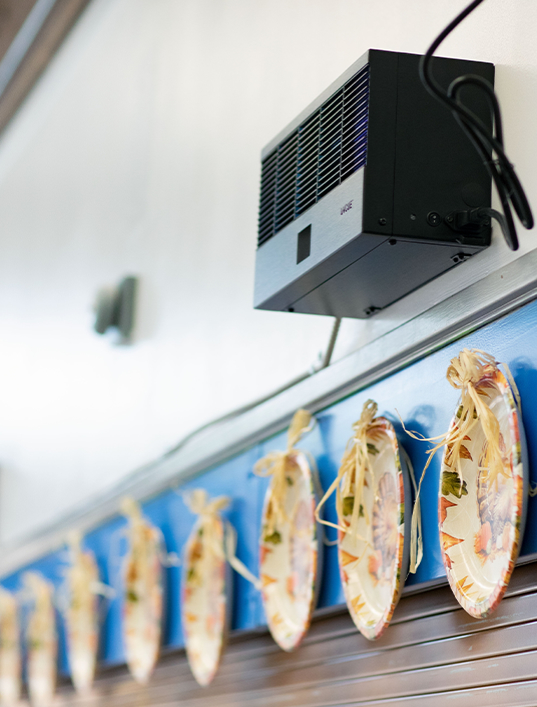
The Healthy Green Schools & Colleges program launched in 2022 and, since then, there has been a growing interest in the quality of indoor air on campuses. Upper Room Germicidal Ultraviolet (GUV) light is a proven air sanitation solution that reduces the risk of pathogens, approved by the CDC as a strategy to improve indoor air quality. In addition to adopting Upper Room GUV, universities and colleges are increasingly designating “green zones” on campus that use all-electric landscaping equipment to reduce emissions, improve air quality and reduce noise pollution.
Minimizing a university’s carbon emissions and creating environments conducive to learning, teaching and working require a holistic approach. In 2024, institutions that aren’t proactive about improvising sustainability on campus will fall behind in more ways than one.
Trend 7
The Role FM Plays in Restoring Trust
The erosion of trust in higher education is a multifaceted challenge that has continued to worsen in recent years. The latest research by Gallup found that only 36 percent of Americans have “a great deal” or “quite a lot” of confidence in higher education. For this first time, a majority of survey respondents expressed a lack of confidence in educational institutions.
The escalating costs of obtaining a degree contribute significantly to this decline in trust, but the solution isn’t just a matter of dollars. Positive perceptions about higher education and the value proposition of each institution are more important than ever in attracting and retaining students. Facilities management is emerging as a pivotal player in establishing credibility and fostering trust heading in 2024.
- Buildings represent one of the largest expenses in an institution’s budget but a facilities organization can help drive down the total cost of ownership, provide valuable insight to reduce the need for capital expenditures, and leverage opportunities for cost minimization. An efficient, economical and ethical approach to managing an institution’s resources — be it time, money, people or spaces — is the foundation of financial stewardship.
- Strategic investments in maintenance, modernization and sustainability initiatives not only enhance the overall campus experience, but also support perceptions of the institution’s commitment to quality and excellence.

- Sustainable, energy-efficient campuses align with broader environmental concerns while also projecting an increasingly important image of responsible stewardship and sustainability. This, in turn, can contribute to a positive narrative surrounding institutional values.
- Quick response times to service requests and a tangible prioritization of student wellness on campus instill confidence by demonstrating an institution's dedication to the well-being of its students and the community at large.
The story each institution tells about itself and the way its values are lived matters now more than ever. Through strategic, community-oriented initiatives and forthright communication, campus facilities management can help reshape the narrative, emphasizing a commitment to excellence, sustainability, financial stewardship and student success.
Your Trusted Integrated Facilities Management Partner in 2024 and beyond
Aramark supports nearly 100 higher education institutions across the country as they address today’s challenges and prepare for the future. Our experts are deeply embedded in industry dynamics, aligned with leading partners, engaged with industry leaders and providing cutting-edge innovations.
As an Integrated Facilities Management provider, Aramark possesses the most complete portfolio of campus solutions – from traditional cleaning and operations to deferred maintenance strategies, capital planning, and energy management. We’re committed to creating clean, efficient and purposefully designed learning spaces that align with your institution’s overarching goals—whether it be recruitment and retention, addressing deferred maintenance, energy conservation or other essential objectives. We don’t just manage your campus facilities, we partner with you and your campus community to deliver the outcomes you desire with unparalleled resources, expertise and solutions.

