
Demand-Driven Services Help Higher Education Overcome Numerous Challenges
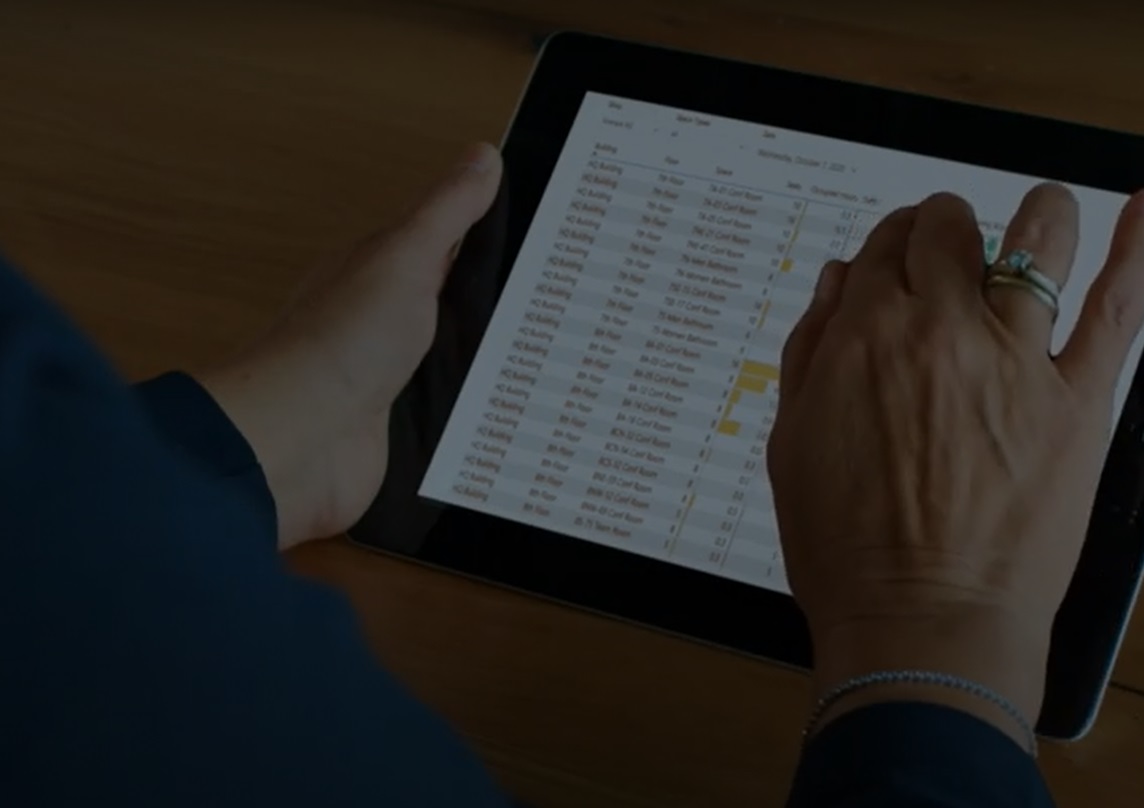
New Service Delivery Model Reduces Cost, Improves Services and Creates Competitive Advantage
With fewer students, higher operating costs facing today’s campuses, traditional facilities management practices are no longer sustainable. Other challenges are also creating problems for higher education administrators — from skilled labor shortages to poor space utilization.
Flexibility can be the answer to overcoming these challenges. But how can you make the concept of flexibility tangible on your campus?
Demand-driven services are a new approach that delivers facilities management based on actual demand as defined by occupancy levels and building usage. It can reduce risk and generate efficiencies in multiple areas of operation.
Demand-Driven Services Deliver Paradigm-Shifting Benefits
Adopting a demand-driven approach to facilities services represents a paradigm shift for higher education, with multiple labor- and cost-saving benefits, including:
- Unoccupied spaces are serviced appropriately or even eliminated, which lowers costs
- Spaces are only cleaned when dirty to save staff time
- Equipment is serviced proactively to prevent disruptive breakdowns
- Heating and cooling are provided based on occupancy, reducing utility costs
- Temperature-dependent material and perishables are closely monitored to avoid spoilage
- Spaces are monitored remotely and in real-time for optimal service delivery
Read on to discover how to bring these transformative benefits to your campus.
1 | Improving Space Utilization with Confidence
vs. Wasting Costs
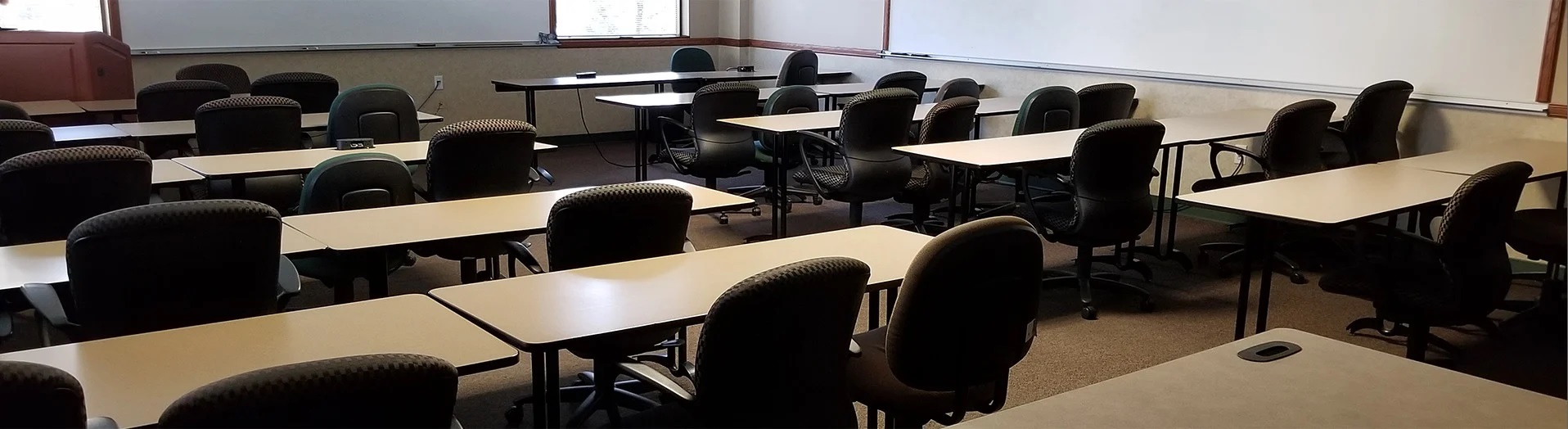
Problem: A typical classroom is occupied less than 60% of available hours
Space on campus is a double-edged sword. You need the room to attract more students. But if it’s not being used efficiently, it’s a drain on your budget to keep space heated, cooled, cleaned, and maintained. As enrollment declines increase pressure to reduce operating costs, the pressure to reduce space and save money will intensify.
Solution: Time-series data based on actual, real-world usage
Deciding to decommission unused space based on educational needs is one thing. Knowing which spaces to reduce is another. Historically, this issue has been decided based on utilization rates. However, most space utilization studies only provide point-in-time information. What’s needed is time-series data based on actual, real-world usage. Armed with such information, administrators can make informed decisions about their allocation and funding of space. Deploying occupancy sensors provide this continuous, real-time data. When combined with operating cost information, this data provides quantitative guidance on which spaces to consolidate, expand, or if necessary, shutter.

2 | Clean Based on Occupancy to Maximize Labor Productivity
Problem: Redundant cleaning of low-use spaces is inefficient
Typically, spaces on campus are cleaned based on a pre-existing schedule, whether they need it or not. This wastes precious manhours that could be spent in tasks, such as increased cleaning frequencies in high-use areas to address neglected project work.
Solution: Occupancy sensors increase custodial productivity
Occupancy sensors also provide critical insight to drive efficiency by avoiding redundant cleaning of space that receives little or no use. As virtual teaching, learning, and working models become more popular, building owners are finding they must alter their service delivery based on where occupancy occurs. Sensors that identify space that hasn’t been used allows for effective reallocation of resources to areas in high demand. During the early part of the COVID pandemic, occupancy sensors helped many organizations increase their cleaning frequencies without adding additional labor. Its application still applies

3 | Improve Customer Satisfaction
Problem: Customers express poor satisfaction with restrooms
Restroom cleanliness and availability of paper supplies has long been the top complaint of facilities services. Because men’s and women’s restrooms are often near one another, they are usually serviced at the same time. However, a study of one facility found that restroom users consume paper supplies at different rates. Restrooms with depleted resources generated more complaints and greater customer dissatisfaction. Usage is a stronger indicator of when restrooms should be cleaned rather than proximity.
Solution: Sensors that capture occupancy and user feedback
The same sensors that influence space utilization and labor productivity can also improve customer satisfaction. Real-time data identify peak occupancy and usage times of restrooms. With this data, building owners can adjust staff scheduling to assure restrooms are cleaned and fully stocked before peak usage. Post-peak cleaning and restocking assures space is ready for the next rush. Additionally, user feedback sensors allow tracking of user sentiment in real-time. When service needs do arise, requests can be shared immediately with service staff via test. The result is improved response times and higher customer satisfaction.

4 | Monitor Assets Remotely to Optimize Limited Labor
Problem: Reactively troubleshooting equipment is expensive
With fewer available skilled laborers and shrinking campus resources, the likelihood of deferring maintenance on equipment and systems, as well as neglecting preventive maintenance tasks, increase. Reacting to an unexpected equipment failure expends considerable labor hours and disrupts other important work on campus. Likewise, ignoring preventive maintenance potentially creates future exposure.
Solution: Remotely monitor equipment to optimize maintenance
Remote sensors allow maintenance teams to proactively monitor the status and operation of campus equipment and facilities. Sensors create a “digital twin” of campus buildings, allowing for virtual identification of equipment issues and providing a digital understanding of equipment conditions. For example, vibration analysis sensors inform building owners of equipment conditions, thereby avoiding unexpected failure and even enabling a predictive maintenance strategy. Remote monitoring allows better allocation of limited labor and minimizes risk of capital costs and program disruption.

5 | Heat and Cool Based on Occupancy to Reduce Energy
Problem: Overspending on heating and cooling
Typically, heating and cooling are provided based on predefined schedules. But as many campuses adopt hybrid operating and learning models, occupancy levels are likely to fluctuate greatly. As a result, this approach can waste considerable resources, utility spend and carbon footprint. Furthermore, indoor air quality, a key factor in controlling airborne transmission of pathogens, is often not a consideration in room temperature management.
Solution: Reduce energy and improve indoor air quality
Linking energy services to building occupancy can avoid the heating and cooling of unoccupied space. A building set to operate from 8 a.m. to 6 p.m. will consume 10 hours of energy, regardless of occupancy levels. A demand-based energy delivery approach helps prevent this waste. In fact, a building that is only used 60% of that same time block could potentially reduce energy by 40%. Occupancy sensors can be partnered with operating schedules to reduce energy consumption wand while still maintaining comfort levels.
Additionally, sensors can allow for large-scale monitoring of indoor air quality, a key factor in combating airborne transmission of pathogens. When coupled with real-time operating data, systems can adjust the amount of outside air, ventilation, and/or filtration strategies to support a healthy environment.
6 | Protect Temperature-Sensitive Materials
Problem: The high cost of refrigeration
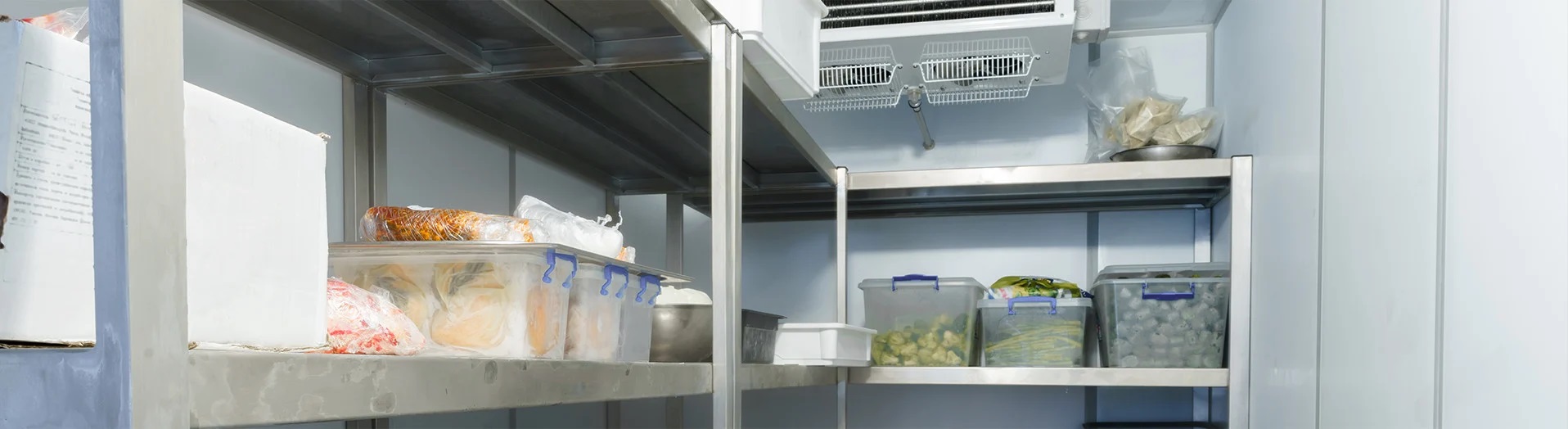
Most universities have a significant investment in perishables that require refrigeration. Academic programs that require deep refrigeration for research materials, such as in life sciences, may have research worth hundreds of thousands of dollars at risk. Further, the average walk-in freezer in a campus kitchen contains $5,000 to $7,000 in perishables. The risk of loss from a drop in refrigeration temperatures can be substantial.
Solution: Monitor temperatures for fluctuations
Remote sensors can monitor the temperature of cold rooms and freezers and provide real-time notification of temperature variations. Alerts can be sent to staff so that immediate corrective action can be taken before valuable content is lost.
How Remote IoT Sensors Enable Demand-Driven Services
The many applications of remote IoT sensors are transforming the facilities industry and enabling demand-driven service delivery. Almost every facet of facilities management can now be monitored remotely — from room occupancy to temperature levels. The advantages include:
- Lowered operating costs
- Improved labor productivity and efficiency
- Improved service response times
- Improved equipment lifecycles
- Optimized air quality
- Improved management of campus spaces
- Enhanced occupant experience and satisfaction
- Increased operating flexibility
Demand-Driven Services and the Cost of Entry
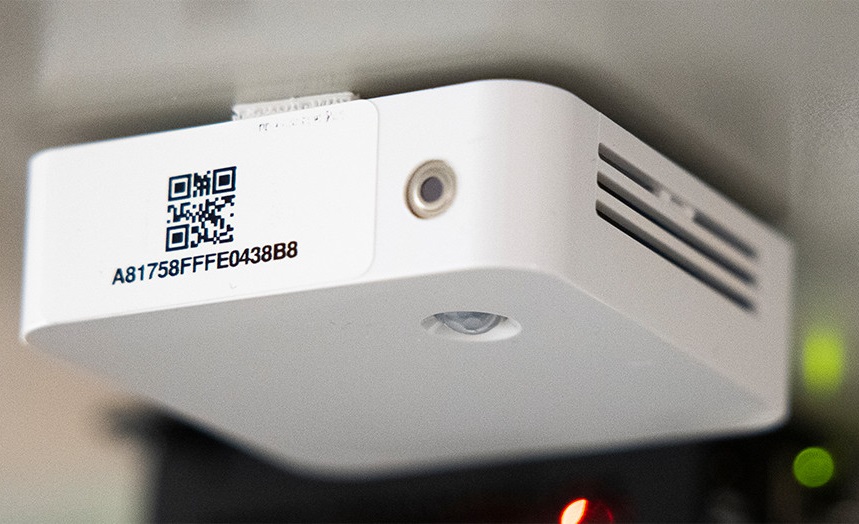
Sensor technology and the IoT provide building owners with information and insights in their building operation previously unavailable. Real-time information is fundamentally changing the way services are provided to both buildings and occupants. Migrating to a demand-driven service model is easy and cost-effective. Sensor deployment is easily scaled based on desired need. Additionally, the information infrastructure doesn’t conflict with existing wired or WiFi IT networks. Platforms are disruptively inexpensive yet provide valuable operating and performance intelligence for improved operation. As higher education seeks to evolve its broader operating model, demand-driven services represent the future of facilities management.
Introducing AIWX™ Connect
The Aramark Intelligent Workplace Experience (AIWX™ Connect) is a data-driven intelligence program that improves facility management efficiencies as we reimagine the occupant experience within a new operating reality. AIWX™ Connect is powered by an IoT sensor network that runs independently of existing IT infrastructures, allowing for easy scalability. While relieving facilities operations of many of today’s challenges, it is extremely cost-effective — making it an ideal option for today’s evolving campuses.
Learn more here: AIWX™ Connect.

Partner with Aramark
When thinking differently about facilities management success and savings, partnering is an ideal option for many institutions. The changes in both the facilities and higher education industries support a new delivery model. As your partner in facilities management services, Aramark can deliver operational success through its innovative demand-driven services program.
Learn more about gaining greater flexibility, agility and cost savings campuses need to survive in today’s more challenging higher education environment.
We are here to serve your unique needs
Contact us today. You have a lot to gain.

