Key Takeaways
- Facilities Management is a direct driver of employee experience The physical environment, thermal comfort, cleanliness, space readiness, and building reliability, shapes how employees feel at work before any HR program or engagement initiative begins.
- Workplace Experience and Facilities Management are strongest when integrated When operational reliability and hospitality-driven service work as a unified system, employees encounter less friction, feel more supported, and report higher engagement and productivity.
- Integrated Facilities Management produces measurable workplace outcomes Research from Leesman and Gensler consistently links FM effectiveness to employee engagement scores, workplace productivity, and organizational connection, making FM investment a business performance decision, not just an operational one.
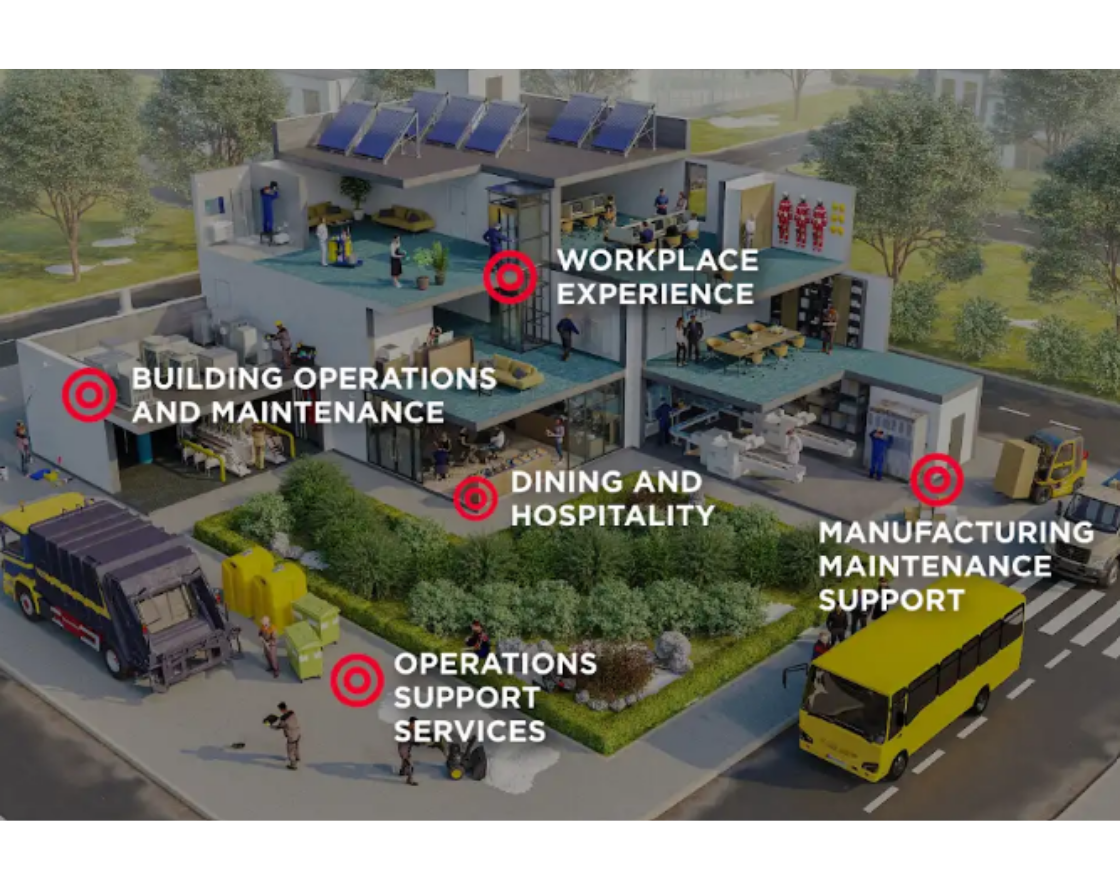
Facilities Management (FM) and Workplace Experience (WX) are the two organizational functions most responsible for shaping how employees feel at work every day. When integrated effectively, they reduce workplace friction, support productivity, and create environments where employees feel comfortable, supported, and engaged. Aramark Facilities Management delivers this integration for Business and Industry clients across corporate campuses, offices, and dispersed portfolios.
What Is the Role of Facilities Management in Employee Experience?
Facilities Management directly shapes the physical conditions employees encounter throughout the workday. Clean, well-maintained spaces, consistent temperature control, reliable building systems, clear wayfinding, and safe environments are not incidental details — they are the operational foundation of employee experience.
When these fundamentals are not met, workplace effectiveness declines regardless of other organizational investments. When they are consistently delivered, employees can focus on their work without friction, distraction, or concern.
The core FM functions that most directly affect employee experience include:
- Thermal comfort: Temperature and air quality control that supports sustained focus and physical well-being
- Space readiness: Meeting rooms, collaboration areas, and workstations prepared and functioning before employees arrive
- Cleanliness and maintenance: Consistently clean, well-maintained environments that signal organizational care
- Lighting: Appropriate illumination across work zones that reduces fatigue and supports task performance
- Safety and reliability: Building systems that operate predictably, creating a sense of stability and trust
- Wayfinding: Clear navigation across facilities that reduces friction and supports efficient movement
What Is a Workplace Experience Manager and What Do They Do?
A Workplace Experience Manager (WXM) is responsible for the human and hospitality layer of the work environment. Where Facilities Management addresses operational reliability, Workplace Experience focuses on how employees emotionally engage with their surroundings throughout the workday.
Workplace Experience Managers oversee:
- Arrival experience: Ensuring employees and visitors are welcomed in a way that sets a positive tone for the day
- Concierge and on-demand support: Providing responsive, human assistance when employees need help navigating space or resolving issues
- Food and beverage availability: Coordinating refreshment and dining options that fuel and motivate employees
- Community activation: Programming and space activation that fosters connection and belonging among employees
- Communication and space information: Keeping employees informed about their environment, services, and available resources
What Is the Difference Between Facilities Management and Workplace Experience?
Facilities Management and Workplace Experience are complementary but distinct functions. Facilities Management focuses on operational reliability and the physical environment, with primary outcomes of safety, comfort, and functionality. Day-to-day, FM teams manage building systems, maintenance, and cleanliness — creating employee trust and a sense of stability.
Workplace Experience, by contrast, focuses on human engagement and service quality, with primary outcomes of belonging, ease, and emotional connection. Day-to-day, WX teams manage hospitality, concierge services, and community programming — creating warmth and deeper employee engagement.
Together, they cover the full spectrum of what employees need from their workplace — both the infrastructure that supports work and the human experience that makes work feel worthwhile.
How Does Integrated Facilities Management Improve Employee Experience?
Integrated Facilities Management (IFM) combines multiple facility services — maintenance, cleaning, food service, security, and workplace experience — under a single managed provider. For employee experience, integration produces outcomes that siloed service delivery cannot.
Reduced friction across the workday When FM and WX operate as a unified system, employees encounter fewer gaps, inconsistencies, and service failures. The workplace simply works — and employees feel that reliability without having to think about it.
Consistent service quality A single integrated provider maintains consistent standards across all touchpoints. Employees experience the same level of care whether they are in a meeting room, a dining area, or a building lobby.
Faster issue resolution Integrated teams communicate across functions, meaning workplace issues are identified and resolved more quickly. Employees spend less time dealing with avoidable problems.
Alignment between space and experience IFM ensures that how a space is maintained aligns with how it is experienced. Operational decisions reflect experiential priorities, and experiential design reflects operational realities.
How Does the Physical Workplace Affect Employee Engagement?
Research consistently links workplace conditions to employee engagement and productivity outcomes:
- Leesman workplace effectiveness data shows that when foundational FM functions — thermal comfort, air quality, lighting, cleanliness — are not consistently delivered, overall workplace effectiveness scores decline sharply, independent of other organizational investments.
- Gensler's Workplace Survey research finds that employees who feel supported by their physical environment report higher engagement, stronger organizational connection, and a greater sense of purpose at work.
- Workplace effectiveness is highest in environments that remove friction while supporting a wide range of work activities — an outcome achieved only when FM and WX operate together.
The implication for organizations is direct: investment in the physical workplace is investment in employee engagement. Facilities Management is not a back-office function — it is a primary driver of how employees experience their organization every day.
What Does Aramark Facilities Management Do to Support Employee Experience?
Aramark Facilities Management provides integrated facilities and workplace experience services for Business and Industry clients. Our services are designed to remove friction, maintain operational reliability, and deliver hospitality-driven experiences that support employee well-being and productivity.
Aramark's B&I FM services include:
- Integrated facilities management across corporate campuses and dispersed portfolios
- Workplace experience and ambassador programs
- Food and beverage services that support employee energy and engagement
- Cleaning, maintenance, and space readiness
- Building concierge and on-demand employee support
By integrating these services under a single provider, Aramark ensures that the operational and experiential dimensions of the workplace work together — creating environments where employees feel supported, productive, and connected every day.
Frequently Asked Questions
Why is the employee experience a growing priority for organizations today?
Employers are recognizing the connection between an engaged workforce and overall performance. Gallup has found that companies with a strong employee engagement have less turnover, higher productivity, and greater profitability.
What is the cost of lost productivity due to lower employee engagement?
In their 2026 State of Global Workplace report, Gallup found that overall global engagement fell to 20%, the lowest level since 2020. They estimated that this translates into $10 trillion in lost productivity globally.
What is the difference between Facilities Management and Workplace Experience?
Facilities Management and Workplace Experience are complementary but distinct functions. Facilities Management focuses on operational reliability and the physical environment, with primary outcomes of safety, comfort, and functionality. Workplace Experience, by contrast, focuses on human engagement and service quality, with primary outcomes of belonging, ease, and emotional connection.
What services are provided by facilities management and workplace experience managers?
Facilities Management (FM) teams manage building systems, maintenance, and cleanliness — creating employee trust and a sense of stability. Workplace Experience (WX) teams manage hospitality, concierge services, and community programming — creating warmth and deeper employee engagement.
How does Aramark improve the Employee Experience?
Aramark provides Integrated Facilities Management services, which includes the critical services that create effective physical environments, and the experiential services that engage employee emotions.
How does Aramark Facilities Management services help employers?
Aramark Facilities Services provide expert cleaning, maintenance, landscaping, and energy management solutions. A clean and inviting space creates a welcoming environment for employees and visitors. It also sends a message that the employer cares about the environment it creates for others. Additionally, comfortable temperatures support a physical environment where employees are most effective in their work. Lighting, space readiness, and building maintenance also play an important role in workplace success.
How does Aramark dining and catering services help employers?
Aramark dining and catering services are at the core of the hospitality layer of the work environment. Food, beverage, and snacks are among the top amenities or perks employees most rate as key to the workplace experience. They serve as fuel to motivate throughout the day as well as an anchor for social engagement. The result is a environment where employees want to work.

