The Hottest Brunch Tables Aren’t Downtown. They’re on Campus
Residential dining halls are community gathering spaces for students, faculty, and staff—but across many colleges and universities supported by Aramark Collegiate Hospitality, they’re increasingly becoming community destination dining spots as well. These spaces are drawing local residents, families, alumni, and visitors who may never otherwise set foot on campus. What were once designed primarily to serve students are now among the most popular and dependable places to dine in their surrounding communities.
From weekly brunch traditions to chef‑driven special events, these residential restaurants are filling a gap in the local dining landscape—offering high‑quality food, accessible pricing, and a welcoming atmosphere that encourages guests to linger.
James Madison University
At James Madison University in Harrisonburg, Virginia, East Campus Dining Hall—known as E-Hall—has become a favorite among students and community members.
“E-Hall is one of Harrisonburg’s best-kept culinary secrets,” said Heather Holsinger, Aramark Collegiate Hospitality Marketing Manager at JMU. “E Hall makes it easy for students and community members alike to enjoy an impressive variety of dishes prepared by our award-winning chefs.”
Located on the edge of campus, community members and students have easy access to parking. Inside the hall is a relaxed environment with chef-driven menus that have helped turn weekend brunches and Sunday dinners at E-Hall into multi-generational traditions. The dining hall’s growing reputation was reinforced this spring when E-Hall earned a nomination for “Best Brunch” by a local newspaper, placing a campus dining operation alongside established local restaurants.
E‑Hall has also become a sought‑after venue for special events. Most recently, “A Night in Paris” attracted a nearly even mix of students and non‑students, creating a vibrant, restaurant‑style atmosphere that reflects the hall’s broad appeal, according to Holsinger.
.png)
Tennessee Wesleyan University
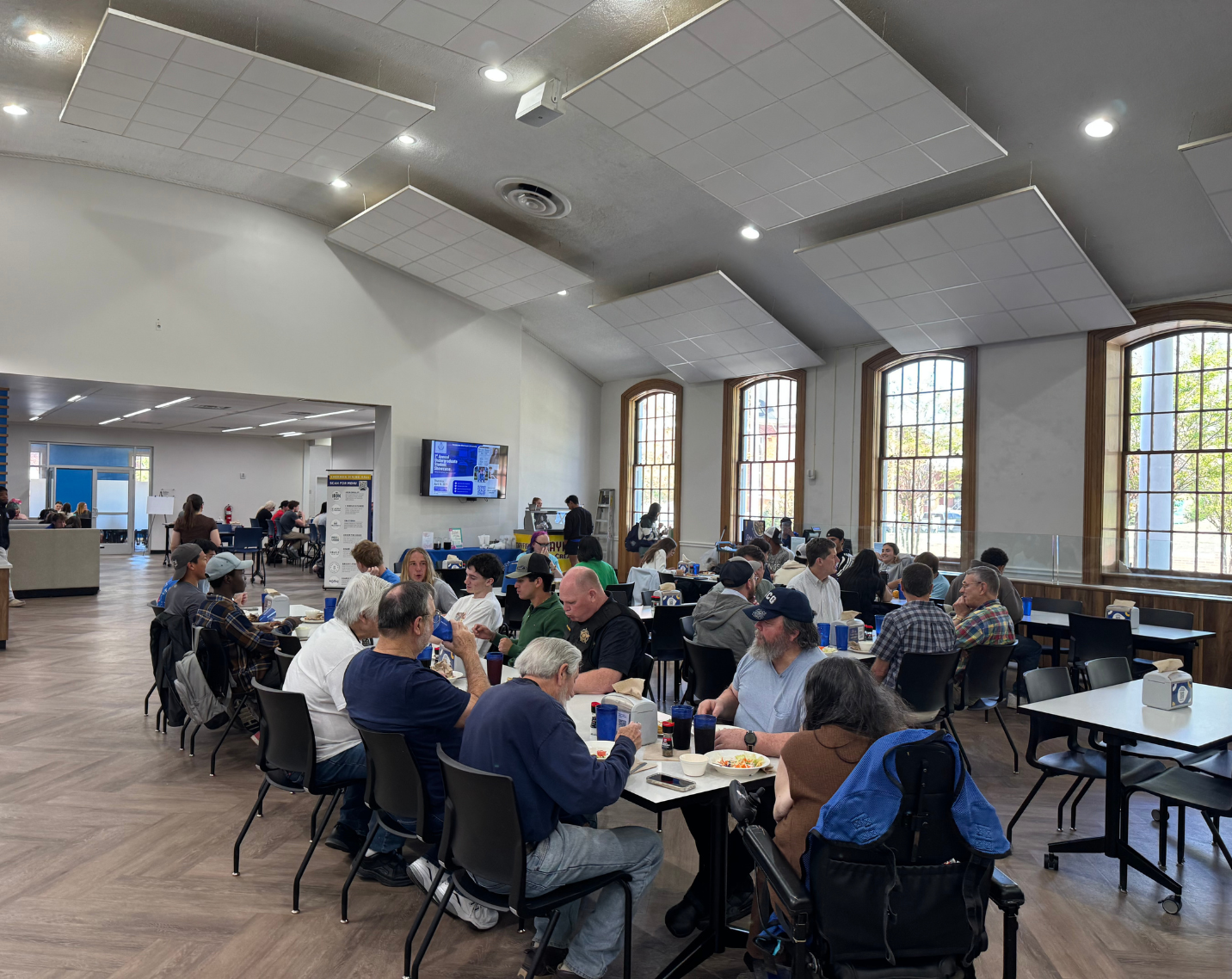
In Athens, Tennessee, Tennessee Wesleyan University Dining identified an opportunity rooted in local culture. With few gathering places available after Sunday church services, Sherman Dining Hall was reintroduced—with support from the university—as an open invitation to the community.
Through steady outreach and partnerships with local media, the crowds for Sunday Brunch have increased significantly since August 2024, driven largely by off‑campus guests. The influence of Sunday Brunch soon extended beyond Sundays. As community members became familiar with Sherman Dining Hall and Tennessee Wesleyan University Dining, weekday lunch traffic increased, driven by returning guests whose first connection to campus dining began at Sunday Brunch.
University of South Carolina
At the University of South Carolina, Top of Carolina offers a dining experience unlike any other in the state. Located atop the Capstone residence hall, Top of Carolina is a 360‑degree rotating restaurant that allows guests to take in panoramic views of Columbia and the surrounding campus, creating a memorable setting that blends dining with a scenic experience.
Operated by Carolina Food Co., Top of Carolina provides special occasion dining and brunch experiences, featuring buffet-style service and curated menus. In addition to public dining, the space is frequently used for private events, celebrations, and university functions, offering a unique setting that elevates gatherings beyond a traditional restaurant experience. Top of Carolina represents a blend of campus history, experiential dining, and hospitality innovation, making it one of the most distinctive venues within the campus’ dining program.
 (1).png)
Schreiner University
At Schreiner University in Kerrville, Texas, Sunday Brunch at the Schreiner Diner has quietly become a weekend institution. Retirees, travelers, faculty members, and families dine alongside students as chefs slice into hand‑carved prime rib—a customer favorite and monthly tradition that consistently draws the largest crowds. For $15 per person, guests move through carving stations, hot entrées, and dessert tables, lingering long enough for the space to feel less like a cafeteria and more like a neighborhood gathering place.
Over a typical semester, the all-you-care-to-eat brunch attracts approximately 1100 guests per month; many of them repeat community visitors who return several times each semester. The appeal lies in consistency with the doors opening every Sunday, the experience is familiar, and the welcoming atmosphere has positioned the Schreiner Diner as a reliable destination beyond campus.
.png)
University of North Carolina, Wilmington
At the University of North Carolina Wilmington (UNCW), on-campus dining has become a natural extension of the region’s coastal food culture. Through long‑standing local partnerships, accessible venues, and chef‑driven programming, UNCW Dining functions as a welcoming gathering place for students, faculty, staff, alumni, and Wilmington residents alike.
Collaborations with local fishermen and campus marine science programs bring North Carolina seafood directly into university kitchens. These relationships are showcased during signature events such as the annual Oyster Roast and Wagsgiving—a more than 30‑year tradition that draws thousands of students and community members together each year around a shared meal.
That sense of connection carries into everyday spaces as well. Central Perch, located inside Randall Library, was intentionally designed as a shared campus‑community environment. Operated through a rotating partnership with four local coffee shops—three of them alumni‑owned—the café functions much like an off‑campus hangout within university walls, encouraging guests to linger and return.
Beyond daily service, UNCW Dining regularly engages the broader community through citywide and philanthropic events. Campus chefs participate in regional showcases such as Feast Wilmington, while hosting and supporting initiatives including Wish Upon a Chef and Epicurean Evening, positioning the campus as a welcoming venue for causes that matter to the region.
At UNCW, dining halls are no longer viewed solely as student-only locations, but as shared civic spaces—offering good food and a welcoming atmosphere that encourages town‑and‑gown connections to form naturally, one table at a time.
Luba Gerasimov, Aramark Collegiate Hospitality Marketing Manager at UNCW, noted, “At UNCW, dining is about far more than food—it’s about connection. By partnering with local fishermen, alumni‑owned businesses, and community organizations, and creating engaging events, we’ve intentionally created spaces where campus and community come together. Whether it’s a signature event like Wagsgiving or a daily coffee break at Central Perch, our goal is to reflect coastal Wilmington’s food culture while fostering a welcoming, shared experience—one meal at a time.”
.png)
Southwestern University
For many years, members of the Georgetown, Texas community have made dining with Pirate Dining at Southwestern University as part of their routine. Many visit weekly for Sunday brunch after church or lunch with friends during the week. Those regular visits have allowed the friendly staff to build meaningful connections with the community.
Families, retirees, and community groups regularly dine at The Commons Residential Restaurant, drawn by a menu that offers something for everyone, including options for a wide range of dietary preferences and needs. The space is designed to combine the convenience of a university dining hall with the welcoming feel of a neighborhood restaurant, comparable to other local restaurants. The all‑you‑care‑to‑eat buffet features a rotating selection of menus that include carving stations, made‑to‑order omelets, a fresh salad bar, desserts, beverages, and more.
“Guests often arrive alone at first, then return with neighbors, visiting family members, or entire church groups. The ample space allows guests to gather comfortably and enjoy their meal without feeling rushed, reinforcing a sense of belonging,” said Deborah Berlanga, Aramark Collegiate Hospitality Marketing Coordinator at Southwestern University.
Sign Up for News Alerts