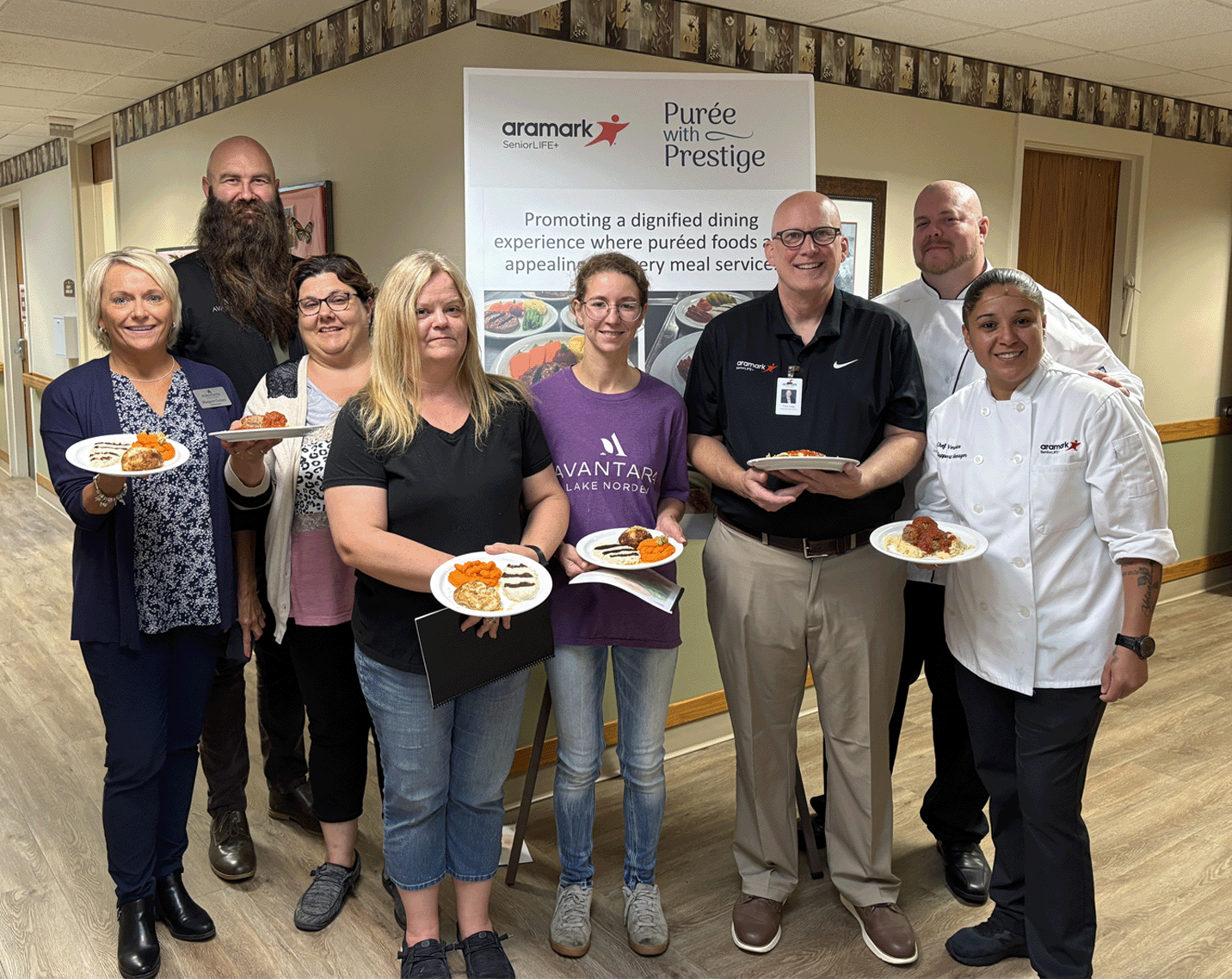
Aramark SeniorLife+ is transforming the dining experience for those with chewing or swallowing difficulties through its innovative "Purée with Prestige" program, ensuring that puréed meals are both safe and enjoyable without compromising on dignity.
By focusing on presentation and the overall dining experience, Purée with Prestige provides nutritious, visually appealing meals that resemble a food’s original, solid form, promoting dining with dignity and improving meal-time quality of life for residents, especially those with dysphagia (swallowing difficulties). All meals are created using the same seasoned food served to other residents which ensures flavor consistency and nutritional integrity.
“We have seen residents go from not eating to eating an increased intake of their food through this program,” said Aramark SeniorLife+ Corporate Executive Chef Lucas Leventry. “While puréed food is a staple in senior living, Purée with Prestige stands out for its simplicity and effectiveness, and our chefs have expressed enthusiasm and pride in elevating the dining experience for residents.”
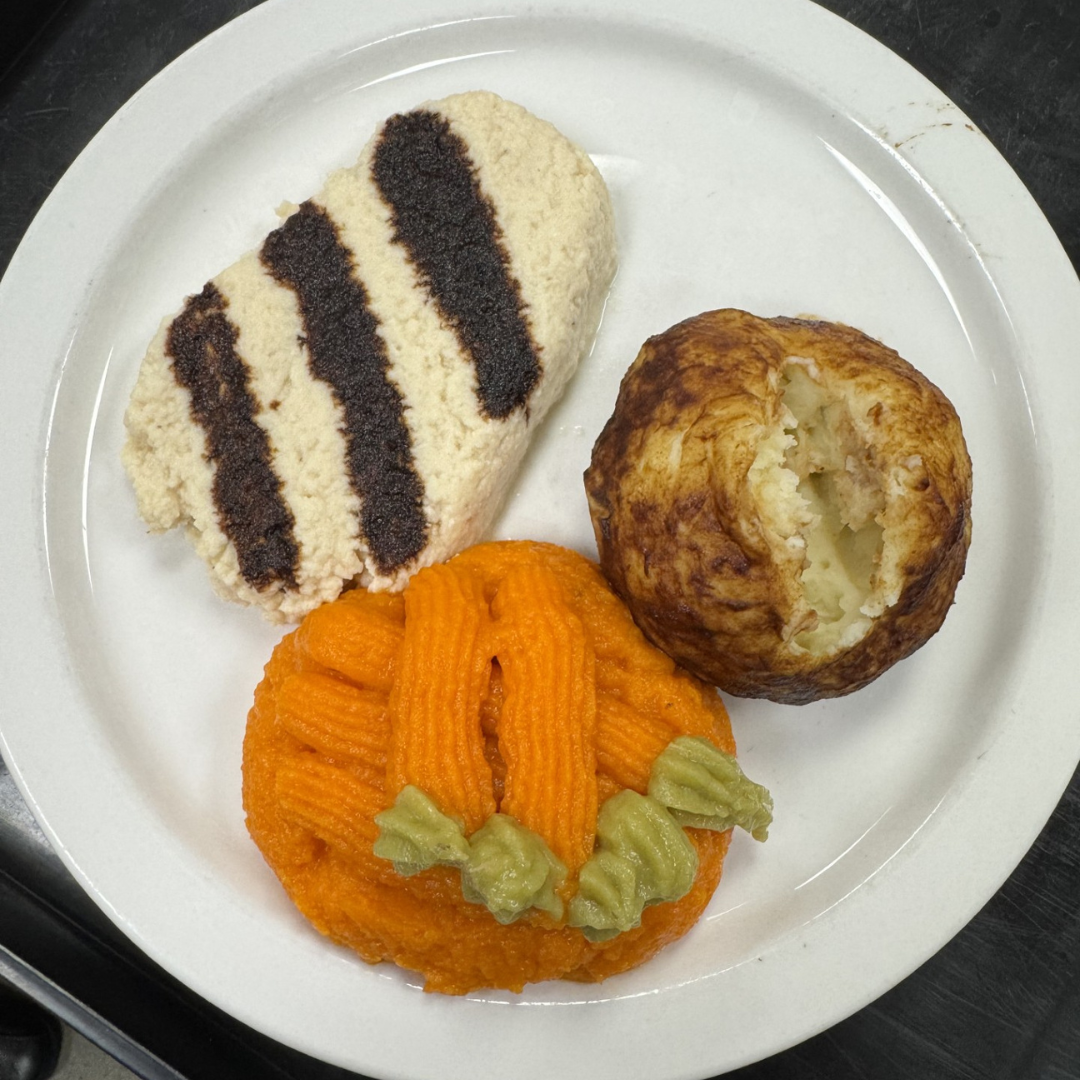
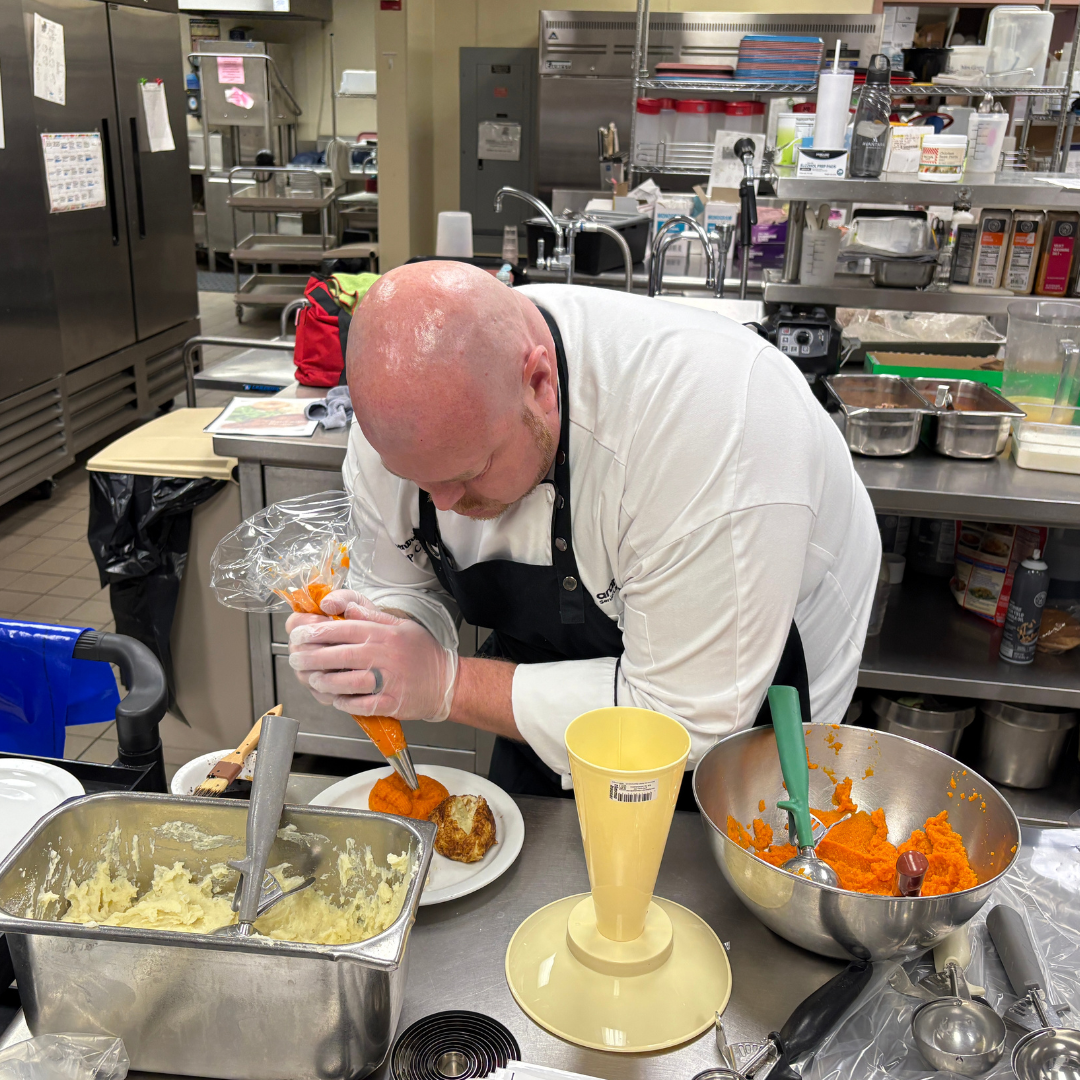
Through the usage of piping bags and pastry tools, Aramark SeniorLife+ dining teams create dishes that, while texture-modified, visibly resemble traditional meals—like spaghetti and meatballs—served to those on a regular diet. The program chooses not to use food thickeners (which can alter the nutritional content) or pre-molded frozen products, while also simplifying the preparation process for culinary teams.
“My favorite thing to create is the puréed baked potato. I’ve fooled many speech therapists with the puréed baked potato who are thrown off by the appearance of it since it resembles a solid food,” said Leventry.
Aramark SeniorLife+ President and CEO Joe Gorman confirms that when SeniorLife+ was launched, it prioritized a program that would serve those with these specific dietary needs: “Our singular purpose is to enhance the life of the residents. By combining culinary creativity with thoughtful presentation, Aramark SeniorLife+ creates a dignified experience to make sure residents who are on a puréed diet are getting a meal that matches their peers.”
Learning to Elevate the Dining Experience
For the past 18 months, Aramark SeniorLife+ Corporate Executive Chef Lucas Leventry has traveled across the country training teams at over two dozen partner communities. The Purée with Prestige program, which has been in use since the formation of Aramark SeniorLife+, stems from Chef Lucas’ experience working in senior living and a desire to improve the dining experience for all residents.
During the training, dining teams learn to create various dishes and sides using piping bags and pastry brushes to shape the food and give the dishes their visual appeal. Browning sauce is used to create grill marks on certain items to visibly enhance the dish. The program also empowers dining team members to become certified trainers, allowing them to educate other senior living chefs on how to properly implement and present Purée with Prestige while ensuring consistency and compliance.
Why Puréed Diets Are Needed
Puréed diets are essential for individuals with weakened swallowing muscles, those who have had a stroke, dental issues, or neurological conditions. Altering textures can help prevent choking and make eating safer and more manageable, says Barbara Ferguson, Aramark SeniorLife+’s Director of Hospitality and Resident Experience.
Ferguson, who is a Registered Dietitian Nutritionist (RDN) and Licensed Dietitian Nutritionist (LDN), explains that weakened throat muscles can make it difficult to safely consume regular textures. Puréed foods and thickened liquids provide safer alternatives by allowing more time for the throat to respond and take hold of the food an individual is swallowing so they do not choke.
“We always hear the cliché, ‘we eat with our eyes’ but it’s true,” says Ferguson on the role of food presentation. “This visual enhancement through our standardized approach to puréed food can improve recognition, stimulate appetite, and restore dignity, which is especially important for residents with dementia or low motivation to eat by giving them back that visual cue.”

