Fordham University is making significant strides in its sustainability goals, and the unexpected secret lies in the appeal of its plant-forward meals.
A Shared Commitment to a Better World
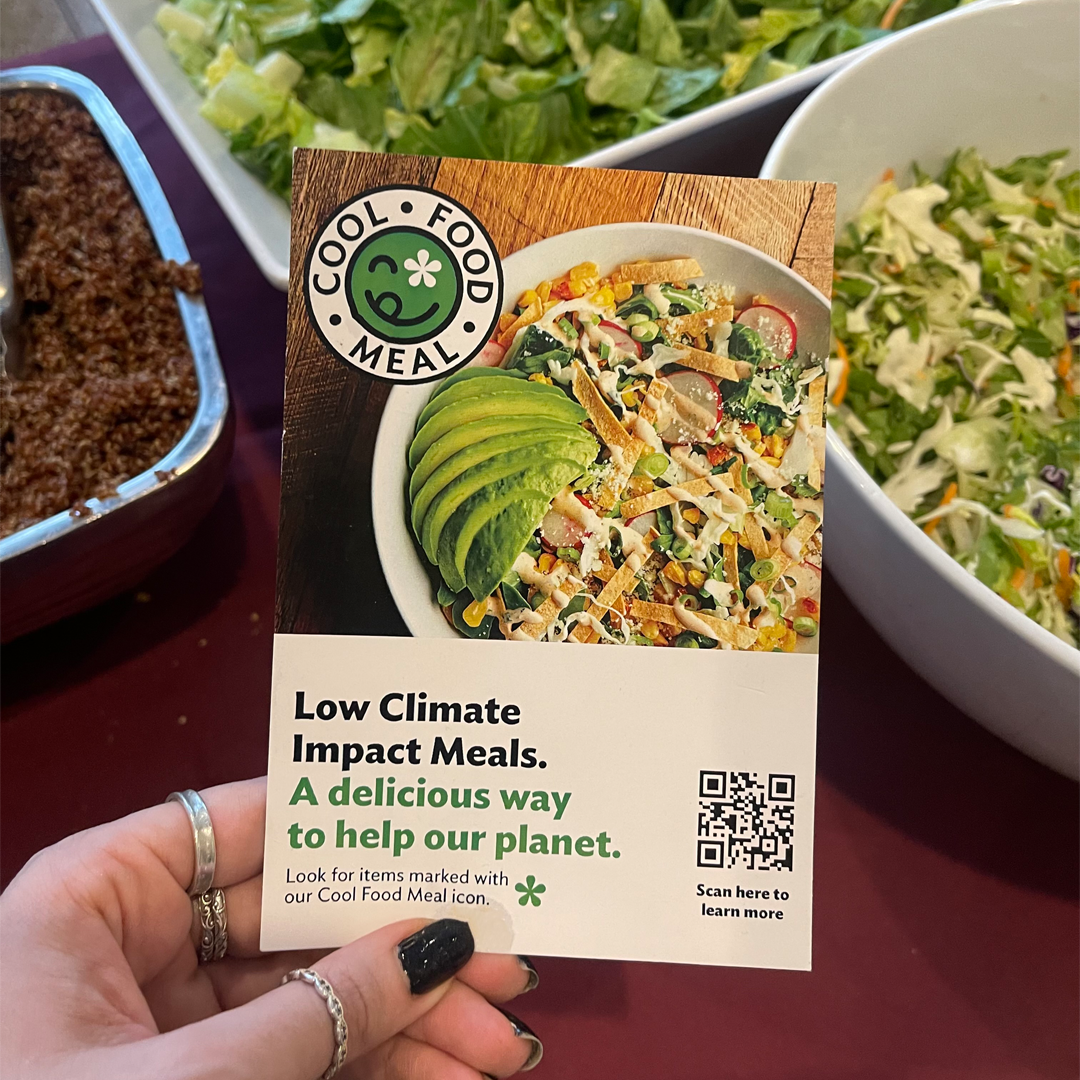
In the Fall 2022 semester, Fordham introduced Coolfood Meals to its menu offerings. These meals are certified climate-friendly by the World Resources Institute (WRI) and are marked with a Coolfood badge, so students can easily identify items that have a low impact on the climate. Aramark Collegiate Hospitality, the university’s dining services provider, was the first food service provider to adopt Coolfood meals and the first contract foodservice provider in the U.S. to sign WRI’s Coolfood Pledge, committing to reduce the GHG emissions associated with the food the company serves in the U.S. by 25 percent by 2030.
Continuing on its journey to lower emissions, Aramark recently joined Fordham University as a signatory of New York City’s Plant-Powered Carbon Challenge, a cross-sector partnership to reduce food-related carbon emissions across New York City.
Alan Horowitz, Vice President of Sustainability at Aramark, reaffirms Aramark’s commitment to reduce food-related carbon emissions: “We’re proud to join the Plant-Powered Carbon Challenge as an extension of our existing Coolfood Pledge. Our journey to reduce food emissions continues through expanded plant-forward choices, procurement, and culinary innovation.”
Plant-Forward Evolution and Popularity
With the addition of Coolfood Meals on campus, Aramark has been proactive in promoting plant-forward options (those that showcase vegetables, fruits, legumes, and grains, but don’t eliminate all animal-based foods) on campus. Early adopters of plant-forward eating at Fordham gravitated toward the offerings as a lifestyle choice. Students quickly learned these meals not only contribute to a greener future, but they’re also satisfying to their taste buds. The popularity of these options has grown beyond those early adopters because of the satisfaction these meals deliver. Even the university’s football team has embraced plant-forward offerings.
Deming Yaun, University Dining Contract Liaison, shares how great-tasting food is helping Fordham reduce its environmental impact. “Increasing the offerings and consumption of ‘taste-centered’ plant-forward options in our campus restaurants embodies Fordham’s mission. It’s about finding solutions to urgent problems while standing for positive impact,” Yaun said.
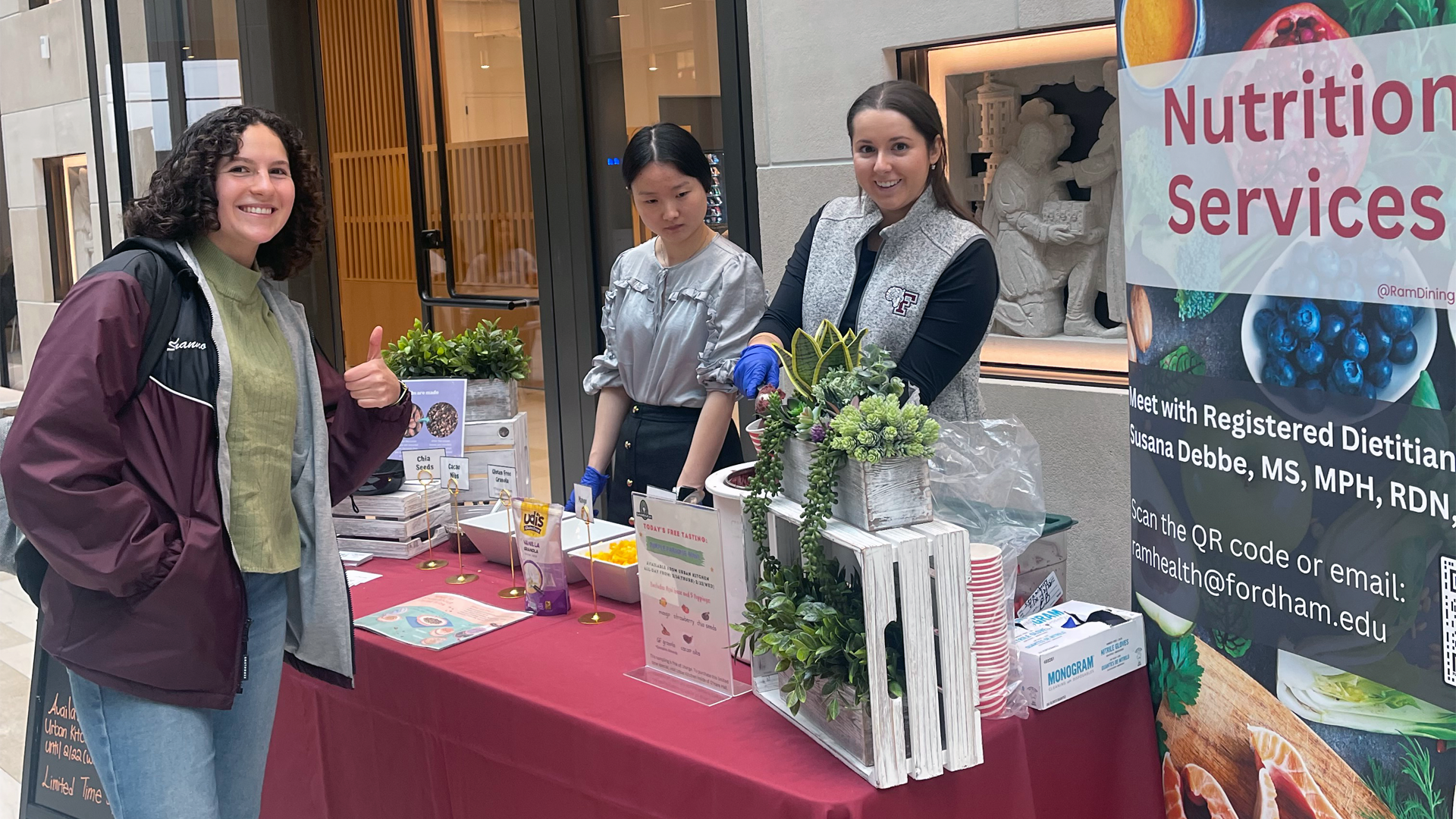
Regular tasting events hosted by Aramark’s Registered Dietitians (RDs) introduce new plant-forward dishes to students, ensuring the menus are always evolving. Additionally, specific plant-based focus groups are conducted each semester to gather feedback and learn about student preferences for sustainable menu items.
“Our partnership at Fordham is a dynamic model that shows the power of shared vision and action,” said Brisbane Vaillancourt, Regional Vice President for Aramark Collegiate Hospitality. “By looking at our quantitative student feedback and close listening to our students and campus communities, we can design a hospitality experience that makes a difference and contributes to University goals.”
Aramark as a Sustainability Leader on Campus
Aramark’s initiatives that support Fordham’s commitment to minimizing its environmental footprint range from daily recycling, local sourcing, fryer oil recycling and more, have caught the attention of university leadership. Here are some examples:
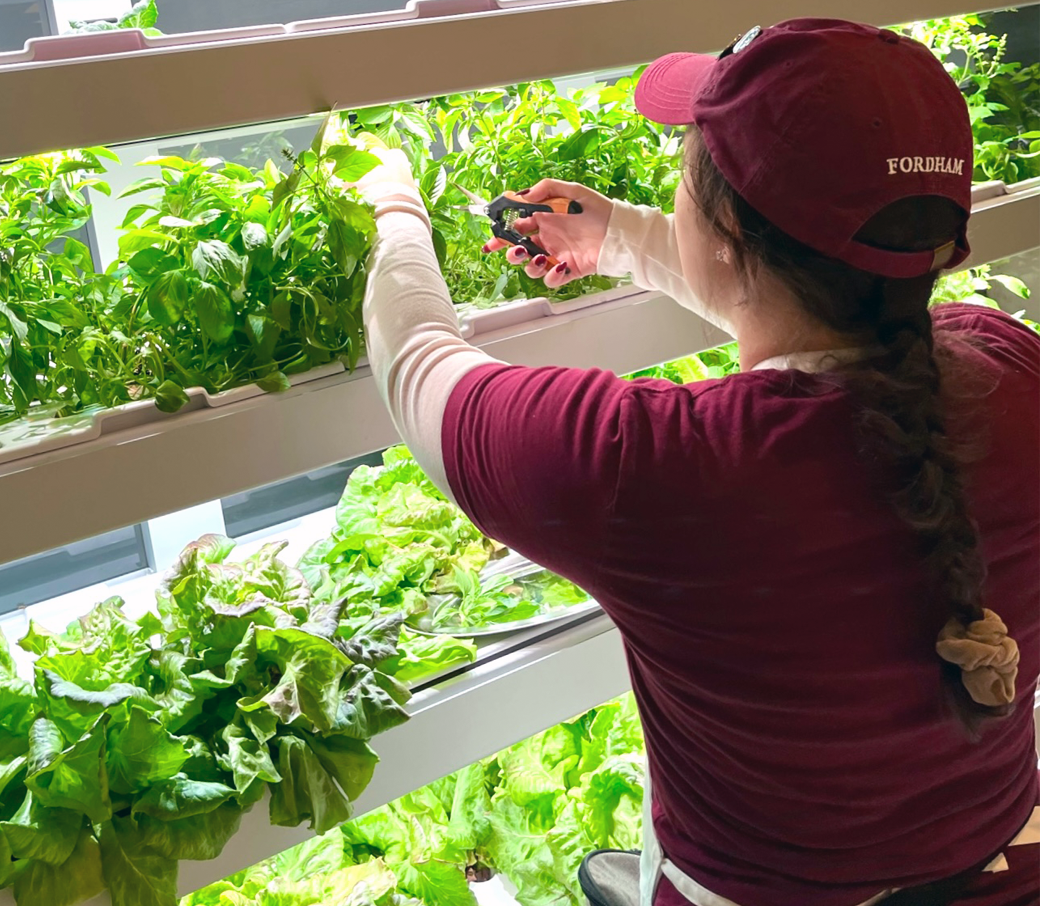
- Babylon Micro-Farm: Fresh micro greens and herbs are grown in-house in dining halls. Babylon inspired dishes are featured on menus when produce has been harvested.
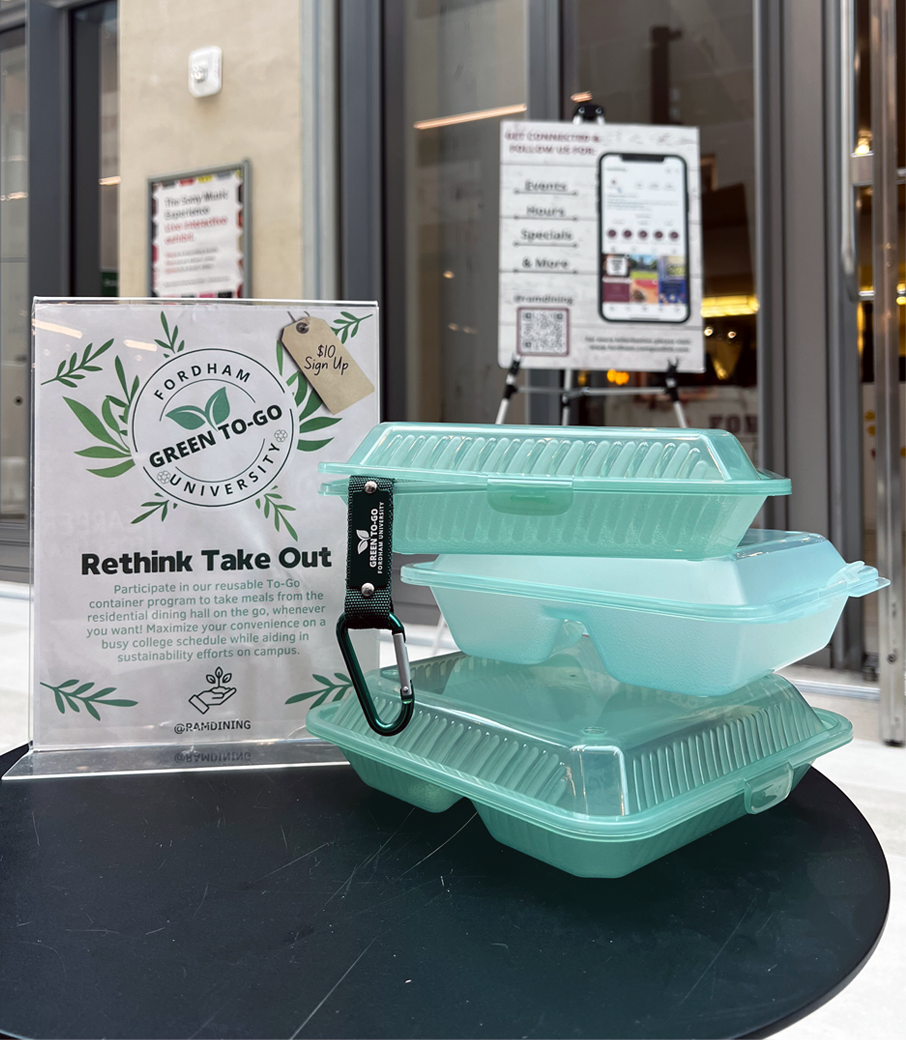
- Green-To-Go Reusable Containers: Fordham offers reusable hinged containers for purchase at residential dining locations. For a one-time fee, students can use these containers to select their meals and take them to go. Used containers can be exchanged for freshly cleaned replacements at the dining facility. Students on unlimited meal plans receive complimentary containers.
- Trayless Dining: As part of the campus’ continuous efforts to minimize food waste and conserve energy and water, all dining locations are free of trays. This practice also reduces the amount of cleaning chemicals entering the waste system.
- Starbucks/Argo Tea Discount Programs: Aramark Collegiate Hospitality encourages reusable mug usage by offering a $0.10 discount to guests who bring their own cups to Starbucks and Argo Tea locations on campus.