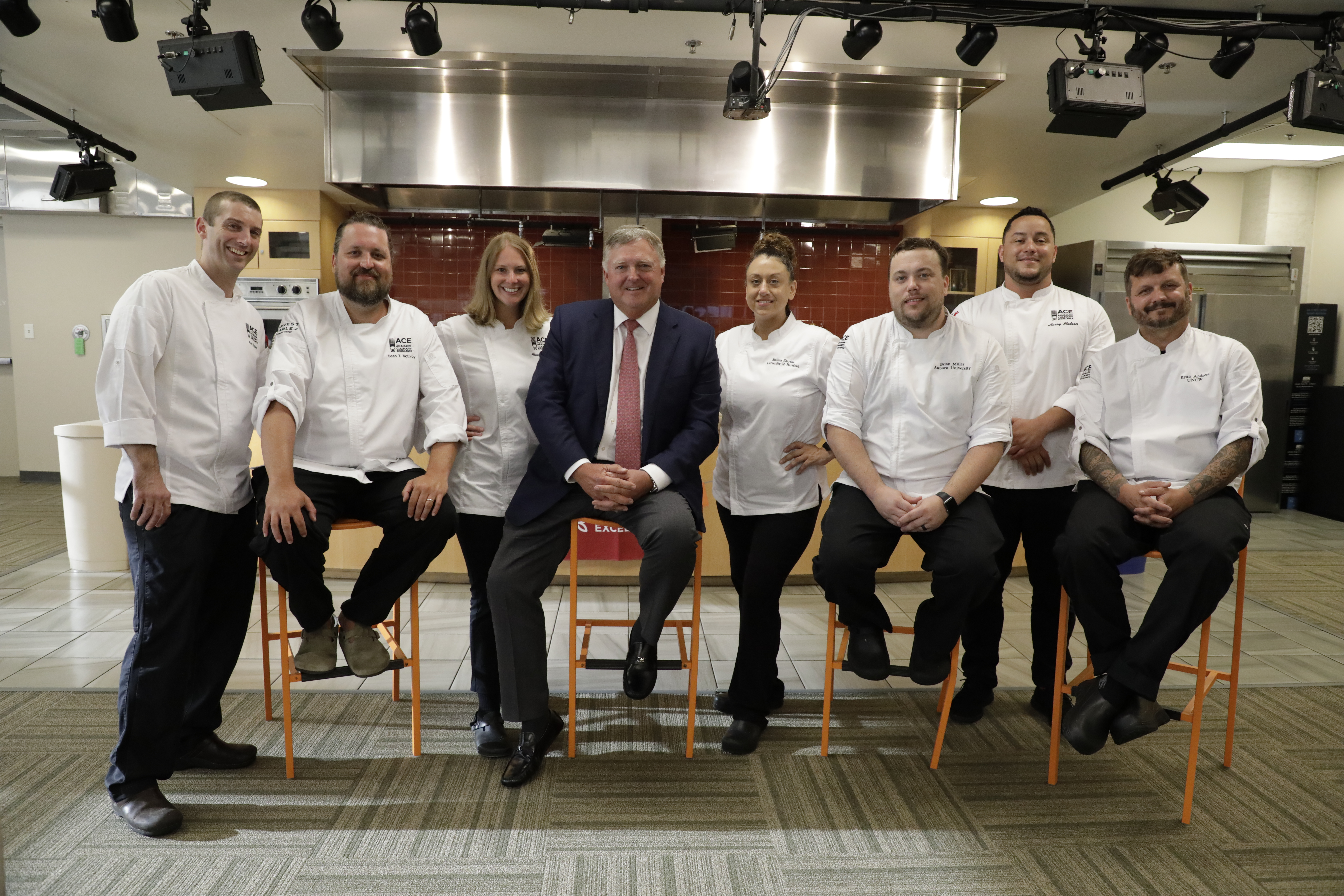
After months of intense regional battles where 114 talented chefs vied for glory, the Aramark Collegiate Hospitality Gold Medal Winners represented their region at the national competition on June 27th at the Culinary Institute of America location in San Antonio, TX. Competitors were judged using American Culinary Federation (ACF) standard scoring.
Chef Ryan Andress from the East region—and resident Chef at the University of North Carolina Wilmington—took home the top honors, winning a gold medal. The winning dishes?
- Appetizer: Adobo roasted gulf shrimp with chimichurri, farro and apricot, tomatillo chow-chow
- Soup: Spiced beef and black bean soup with citrus crema, crispy parmesan and gremolata
- Salad: Texas “Summer” green salad with herb grilled chicken breast, strawberries, avocado, queso fresca, chili spiced almonds, chef’s vinaigrette
- Entrée: Chicken fried local red snapper, sweet potato sunchoke hash, pickled chayote-jalapeno salad and pork belly braised collards
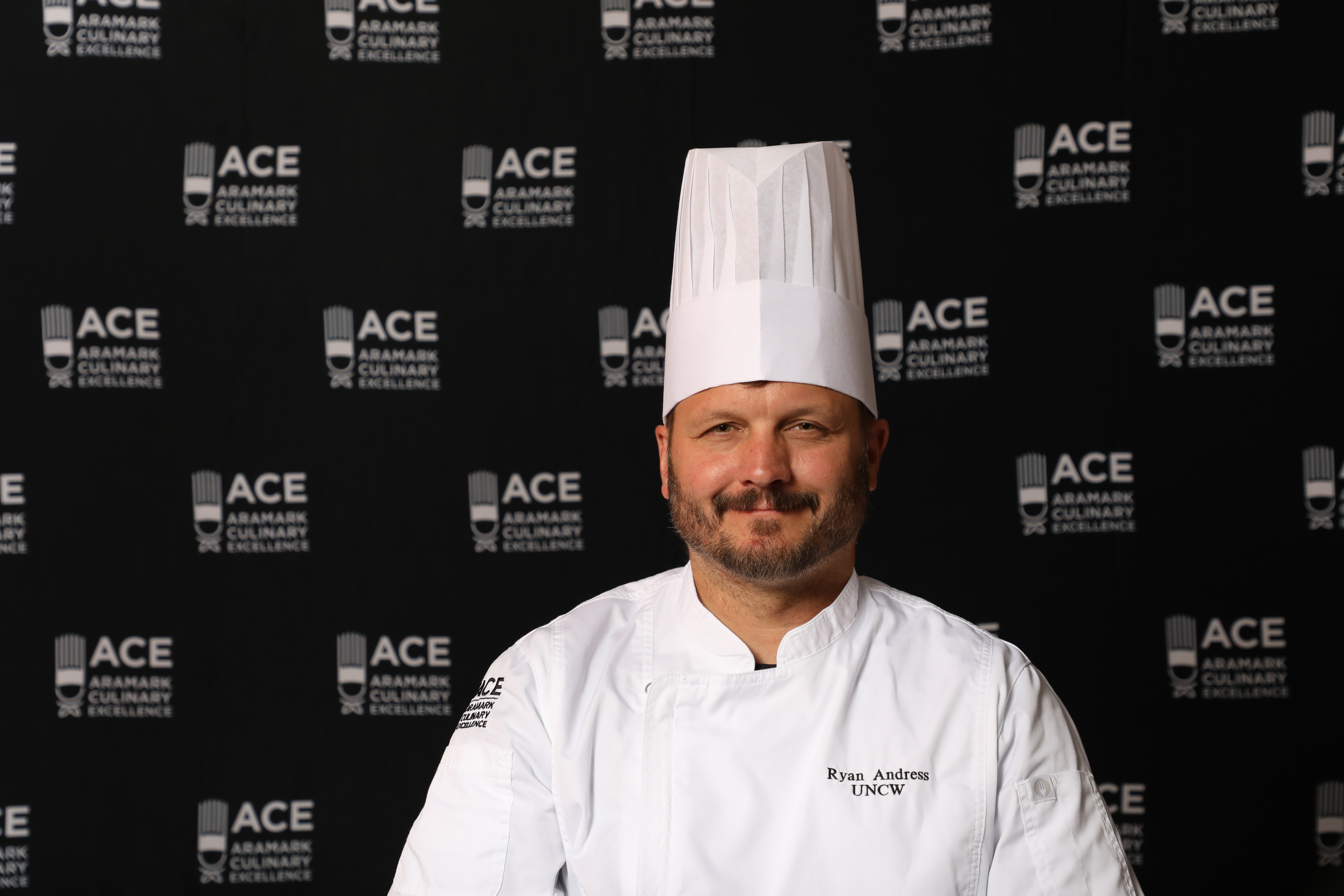
Chef Ryan Andress
Resident Chef, University of North Carolina Wilmington, Aramark Collegiate Hospitality
Regional Triumphs
In regional competitions held during the spring semester, chefs showcased their skills by crafting unique entrée plates. The guidelines were clear: create a harmonious dish with appropriate accompaniments, garnishes, and sauces. Each competitor meticulously prepared four portions of their entrée, focusing on a specified protein.
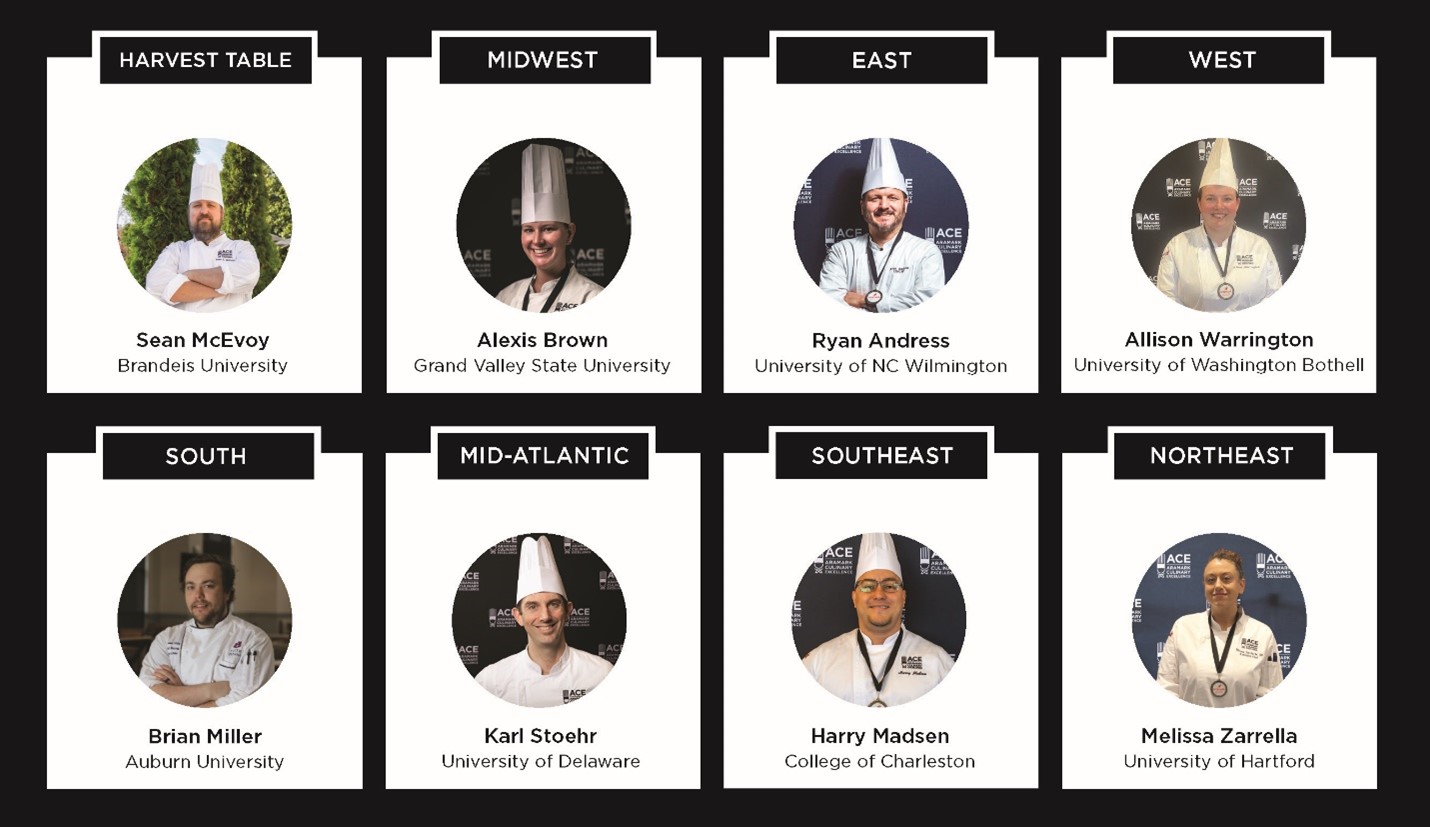
The top winners who went on to compete in Nationals were:
- Northeast: Melissa Zarella, University of Hartford, earning a silver medal
- Mid-Atlantic: Karl Stoehr, University of Delaware, earning a bronze medal
- Southeast: Harry Madsen, College of Charleston, earning a bronze medal
- South: Brian Miller, Auburn University, earning a bronze medal
- Central: Alexis Brown, Grand Valley State University, earning a bronze medal
- West: Allison Warrington, University of Washington, Bothell, earning a bronze medal
- Harvest Table: Sean McEvoy, Brandeis University, earning a silver medal
“We love to provide an arena for our Chefs to showcase their creative talents in a way that inspires their colleagues,” said Alisdair Maclean, Regional Vice President and executive sponsor for the national chef competition in Collegiate Hospitality. “We are committed to the employee experience and appreciate the excellence that our Chefs bring to their schools every day. The partnership and support of the Culinary Institute of America and the American Culinary Federation make this possible, and our congenial relationships and competitive natures make this annual event incredibly fun and rewarding.”
The National Mystery Basket Challenge
The national competitors faced the Mystery Basket format in the final Chef showdown. They had to create a four-course menu that includes an appetizer, soup, salad, and main course. But the twist was that the ingredients are shrouded in mystery.
What’s Inside the Basket?
- 2 Primary Proteins: One of these must be seafood, adding an oceanic flair to the menu.
- 3 Supplementary Proteins: Chefs will need to balance flavors and textures.
- 4 Vegetables: A rainbow of colors awaits—creativity is key.
- 2 Fruits: Sweet and savory combinations come alive.
- 1 Starch or Grain: A foundation for hearty satisfaction.
- 4 Miscellaneous Items: Wildcards that spark innovation.
Race Against Time
The clock ticked as competitors had just 30 minutes for setup. Menus had to be submitted to the kitchen judge during this window, and then the real work began. The Chefs had four hours of cooking and service time, with a service window opening at 3 hours and 20 minutes. Within 40 minutes, Chefs had to present four portions of each course, ensuring impeccable taste, presentation, and nutritional balance.
Judging Criteria
The American Culinary Federation (ACF) standards governed scoring. Four ACF-certified judges—comprising one Kitchen Judge and three Tasting Judges—assessed both the kitchen and tasting aspects.
Judges evaluated:
- Serving Methods and Presentation: Fresh, colorful, and practical.
- Portion Size and Nutritional Balance: A delicate dance of protein and carbs.
- Creativity, Menu, and Ingredient Compatibility: Harmonious flavors and textures.
- Flavor, Taste, Texture, and Doneness: The art of balance.
- Kitchen/Floor Evaluation: Sanitation, mise en place, technique, and timing.
“All are champions to us at Aramark Collegiate Hospitality where they curate experiences for students, faculty, staff and visitors every day,” said Jack Donovan, President and CEO of Aramark Collegiate Hospitality. “They deliver best-in-class culinary excellence, and they champion remarkable service so that our customers have authentic experiences. And when they leave San Antonio, each will continue to craft imaginative menu solutions that blend into the unique culture of each campus we serve. It’s a critical part of what we do to deliver on the hospitality ecosystem for each campus.”

About Aramark
Aramark (NYSE: ARMK) proudly serves the world’s leading educational institutions, Fortune 500 companies, world champion sports teams, prominent healthcare providers, iconic destinations and cultural attractions, and numerous municipalities in 15 countries around the world with food and facilities management. Because of our hospitality culture, our employees strive to do great things for each other, our partners, our communities, and the planet. Aramark has been recognized on FORTUNE’s list of “World’s Most Admired Companies,” The Civic 50 by Points of Light 2024, Fair360’s “Top 50 Companies for Diversity” and “Top Companies for Black Executives,” Newsweek’s list of “America’s Most Responsible Companies 2024,” the HRC’s “Best Places to Work for LGBTQ Equality,” and earned a score of 100 on the Disability Equality Index. Learn more at www.aramark.com and connect with us on LinkedIn, Facebook, X, and Instagram.

