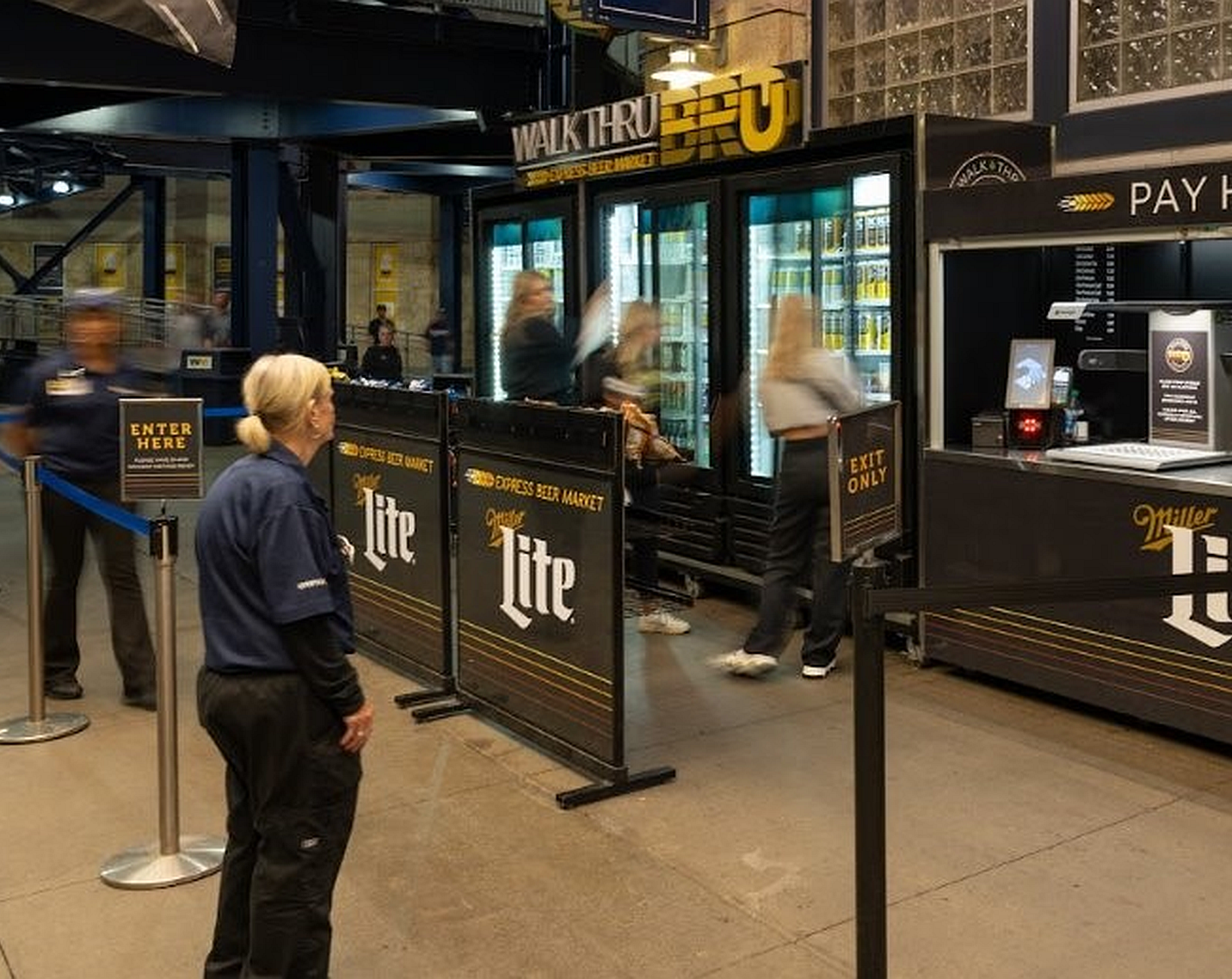
Creating extraordinary, immersive experiences for fans at the venues Aramark Sports + Entertainment serves, the company employs a thoughtful, data-driven, unique approach to fully understand fans’ tastes, expectations, and behavior.
"Data has always been the foundation of everything we do. We continue to advance our analytics capabilities with development of sophisticated tools, models, and technologies to better understand our guests and prescribe opportunities to drive our clients' business," said Scott McDade, Vice President, Data Science, Aramark Sports + Entertainment. “It's how we unlock new ways to serve our guests that are exciting and meaningful while optimizing operations and driving returns."
One way the team achieves this is by activating its data science team to thoroughly understand how business decisions and external factors impact fan experiences and client outcomes.
“We are committed to gathering and examining detailed analytics to go beyond basic transaction-level data to interpret and predict behavior changes at the individual consumer level,” said McDade. “This analytic ability and rigor create better experiences for guests and better outcomes for our clients—and is a differentiator in our industry.”
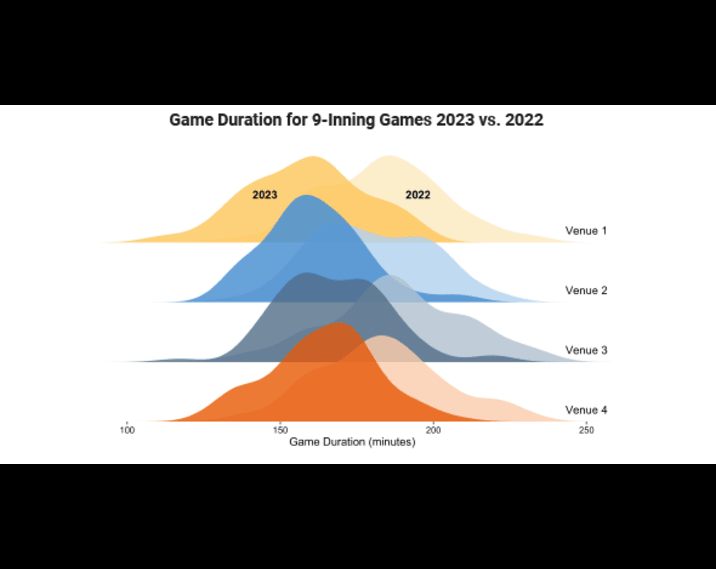
Game lengths reduced on average 24 minutes across Aramark's MLB venues with more consistent and shorter durations than the previous year.
Study: How MLB Rule Changes Impact Fan Behavior
In 2023, Major League Baseball (MLB) implemented several rule changes, including a new 20-second pitch clock that directly impacts rate-of-play and duration of games. After the rule change, nine-inning MLB games became 24 minutes shorter on average than previous seasons.
“We set out to find out what, if any, impact this rule change had on consumer behavior,” said McDade. “Combining several sources of data, we analyzed anonymous customer level transactional data at four of our MLB venues throughout their game day experiences before and after the rule change took effect.”
From more than 11 million customer transactions between 2022 and 2023, the Aramark Sports + Entertainment data science team was able to identify and analyze almost 4 million customer transactions using electronic point-of-sale (POS) system data.
Testing the Data to Understand Real Behavior
To better understand consumer behavior and to make informed decisions about how to best align service with the findings, the Aramark Sports + Entertainment data science team tested five hypotheses, searching for answers to the following questions:
Were consumers less likely to make multiple purchases in 2023 compared to 2022?
Do consumers make their first purchase at a different time in 2023 compared to 2022?
Did consumers make more purchases before the first pitch in 2023 compared to 2022?
Were repeat transaction consumers more or less likely to visit multiple stands?
Was there a change in the time that elapsed between first and second purchases in 2023 compared to 2022.
Ultimately, the data confirmed fans behaved similarly despite the significant change in the pace of play. While fans did shift slightly to making earlier purchases, they were just as likely to purchase as much and as frequently as they did the year before.
With this confirmation, and to combat the shortened buying window for fans, Aramark Sports + Entertainment used the offseason to focus on ways to shift more fans into pregame purchases and targeted expansion of quick service models to speed up transaction times while also increasing variety.
"Technology, data, and analytical tools are evolving at a rapid pace,” said McDade. “We are dedicated to data innovation to stay ahead of the curve by reducing the guesswork and providing insights that allow our operators and clients to make informed decisions.”