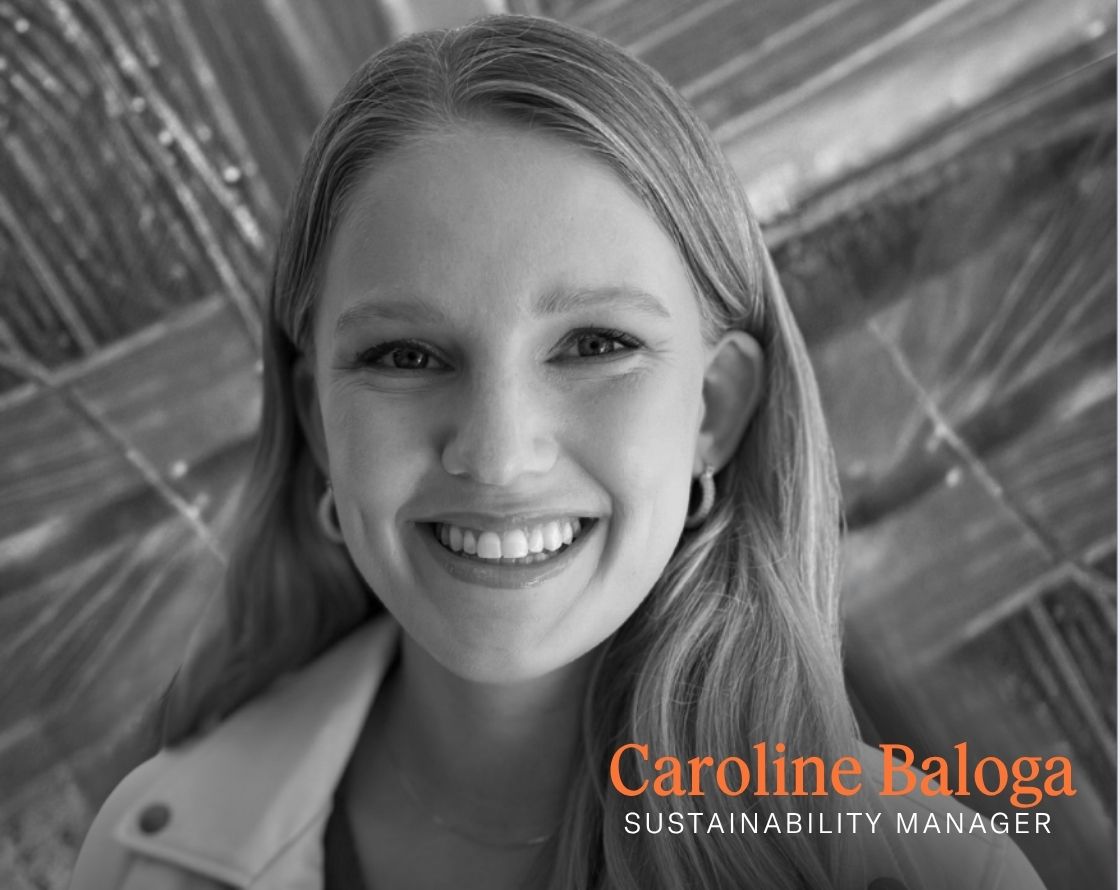
By Caroline Baloga, Sustainability Lead | LifeWorks Restaurant Group, part of Aramark’s Workplace Experience Group.
I grew up in a house where food was everything. My parents are both food scientists, so dinner wasn't just dinner — it was a conversation about where things came from, how they were grown, what it meant to cook with care. I didn't realize until much later that I was being shaped by all of it. When I started working in sustainability, food waste is the issue I keep coming back to. It's personal. It's practical. And when you start paying attention to it, it changes your relationship to food.
Food waste is easy to overlook. It can occur in every step of the process- at the farm level all the way to when a plate reaches the table. But when you build the systems to make it more visible, you can start a lot of conversations.
THE RESULTS ARE MEASURABLE
As a reporting signatory to the U.S. Food Waste Pact, LifeWorks contributes anonymized food waste data from select workplace dining programs. Aramark's Workplace Experience Group is among the contributing signatories, and the dataset represents 81% of the Business & Industry segment of foodservice nationally. The results, measured year over year, and published in the Pact’s 2025 Impact Report, tell a clear story.
4,000 tons reduction in Business & Industry food waste
Achieved collectively from 2023 to 2024 across reporting signatories
$15.9M in wholesale surplus food costs avoided
Cost avoided by reducing food waste
66% average food waste reduction
Across four Employee Engagement pilots, driven by over 750 frontline worker ideas
55% reduction in food waste at events
Through the Low Waste Events Pilot, which produced new guidelines for food waste measurement and reduction at events now available across the industry
These are not projections. They are the result of teams paying close attention, every day, to what gets wasted and why.
"Food waste is one of those issues that resonates across all kinds of people. It's social. It's environmental. It's financial. And it shows up in every kitchen, every event, every day." -Caroline Baloga
THE WORK STARTS BEFORE ANYTHING GETS THROWN AWAY
Across LifeWorks kitchens, food waste tracking begins before a single item is composted or discarded. Teams set ingredients aside, weigh them, log the source, whether it was overproduced, trimmed, spoiled, or left over from a catering guarantee, and enter the data into a waste tracking platform. Depending on the account, that may be Leanpath or another tool, but the discipline is consistent: measure first, then act. That information becomes a live dashboard. Chefs can check it during the week, and every Monday it anchors a team meeting. The conversation is direct: what got wasted, why it happened, and what the team is changing as a result.
Over time, patterns emerge: A workplace campus that consistently over-produces on holiday weeks; A station that loses the same proteins week after week. Having that visibility allows teams to make purchasing decisions and menu changes with real evidence behind them, not guesswork.
WHERE AI ENTERS THE KITCHEN
One of the most meaningful upgrades to this system is also one of the most practical. Through our work with Leanpath, AI is now layered into the platform. Rather than asking chefs to analyze weeks of data on their own, the system does it for them, surfacing patterns and suggesting actions based on what it finds.
Caroline describes what this looks like in practice: the system might flag that a kitchen has been over-producing a particular protein for three weeks running and offer a suggestion for adjusting quantities or finding a secondary use. For a chef managing a full team and a busy service, that kind of intelligent summary removes a real barrier to acting on the data.
LifeWorks is also designing new processes and work flows to track post-event catering waste, the food that ends up visible on buffet lines and remains at the end of the event. This is the waste that associates walk past every day. Getting accurate tracking at that stage is the next frontier.
WHAT A SHARED SHELF CAN DO
One of the examples I'm most proud of didn't come from a dashboard. It came from a shelf.
At one of our café locations, I worked alongside Lead Cook, Chef Zachary Viohl, to pilot a simple program: if a team member had ingredients they weren't going to use, rather than discarding them, they placed them on a designated shelf in the kitchen. Open to anyone. No waste, just an invitation.
What followed was a shift in how the kitchen operated. Chefs started building seasonal boards around what was available. A non-alcoholic sangria appeared, made from leftover fruit. Dishes got more creative because necessity made room for imagination. The data from the U.S. Food Waste Pact case study, focused on employee engagement showed measurable reductions at participating sites, along with over 181 ideas generated by frontline teams.
Sustainability in a kitchen is not about what you remove. It is about what you choose to see differently.
WHAT IS COMING NEXT
The organizations LifeWorks serves are paying attention too. Associates walk past catering leftovers at the end of a lunch event. Clients ask what is being done about it. Every quarter, LifeWorks shares food waste data with its clients because that transparency is part of what a real hospitality partnership looks like.
LifeWorks continues to deepen its work across all three stages of waste: back-of-house kitchen production, catering and events, and the emerging space between the two. Alongside partners like Leanpath and the U.S. Food Waste Pact, the team is also preparing to submit an entry for the Menus of Change competition in April, featuring an upcycled beverage developed in one of our kitchens.
The technology will keep improving. The data will get sharper. But at the center of all of it is something more fundamental: a belief that good food deserves to be treated with care, from the moment it arrives in a kitchen to the moment it reaches a plate.
When you start paying attention to food waste, it turns out you start caring about a lot of other things too.
Caroline Baloga is the Sustainability Lead for LifeWorks Restaurant Group. She leads food waste strategy across corporate dining accounts and contributes to the U.S. Food Waste Pact as a reporting signatory. Her work spans employee engagement, data-driven kitchen operations, and AI-assisted food waste tracking.

