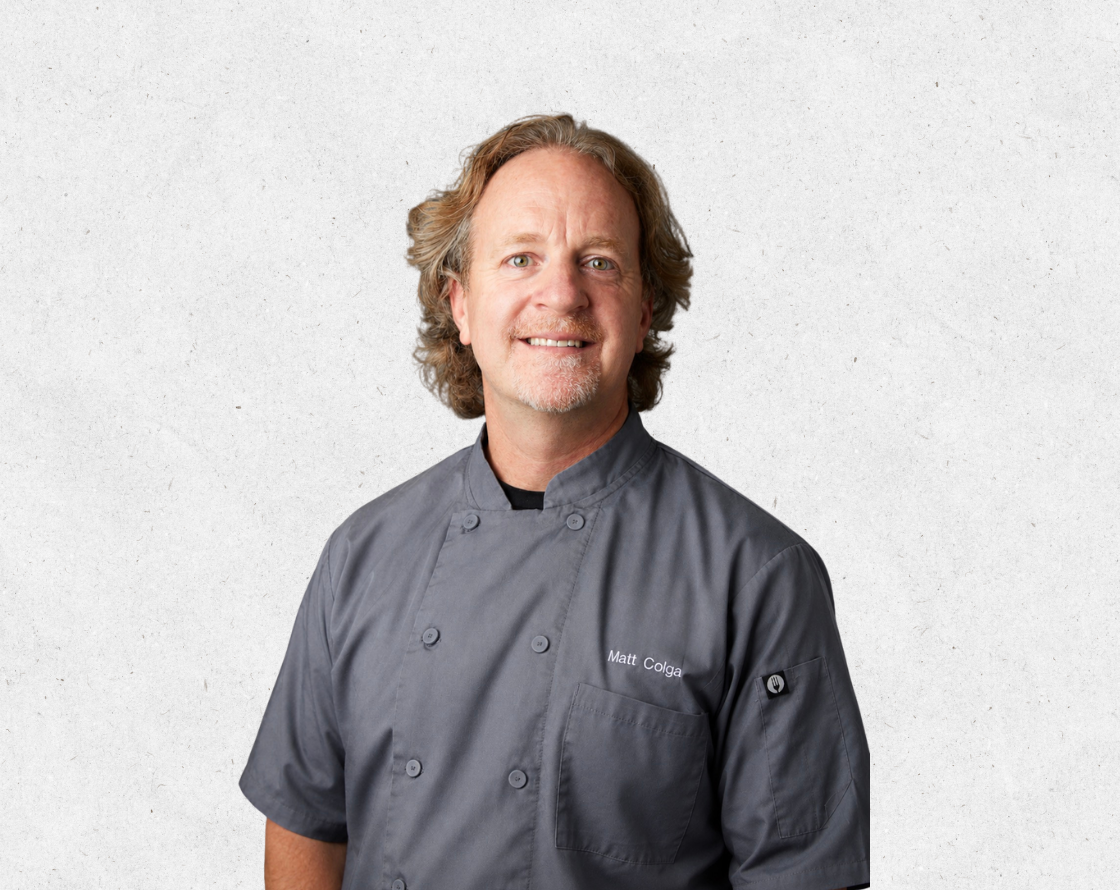
By Matthew Colgan, Culinary Director, LifeWorks Restaurant Group
Most chefs will tell you their story starts at a grandmother's apron. Mine starts with being hungry. I grew up in the East Bay, raised mostly by a single mom alongside three sisters, and I got into food because I wanted to eat well. I took my first kitchen job at 14, and all these years later I still have not reached full. That hunger, the literal kind, became the other kind: a curiosity about food that has carried me through every kitchen since.
I studied philosophy in college, but I was always cooking. An obsession with Italy eventually led me to the back door of a restaurant in the Chianti hills, where farm to table was not a phrase on a menu but a person arriving with eggs, herbs, and a whole lamb, and figs you picked off the tree to lay beside prosciutto curing in the basement.
Back home, I spent fifteen years as an executive chef running an extreme seasonal menu, the kind that changed the moment a new variety of summer pepper came through the door. I opened other rooms too: Italian, Latin, a live music venue. Then two small children made me wonder whether I would ever see a weekend again, and I learned something I had not thought possible: a chef could cook at this level Monday through Friday. That discovery is what eventually brought me to LifeWorks Restaurant Group, where chef-led corporate dining runs on exactly that philosophy.
The One Idea That Changes Everything
Here is the line I repeat to my chefs more than any other. You feed a lot of people, but you feed the same people every day.
That one idea changes everything about how you cook. A restaurant can serve a guest a perfect meal once and call it a success. We see the same guests tomorrow, and the day after. So the menu can never coast. The fastest way to lose a room is to settle into a six-week cycle and let it run. People notice immediately. They feel it before they can name it. The work is to keep asking what we have not done yet. We build on our curated restaurant concepts, a Japanese pop-up one week, Italian the next, but the question is always the same: where have we not gone before, and what would surprise someone who eats here all the time.
When we got the summer menu wrong at a LifeWorks café in Los Angeles, that question is what reset us. We had introduced new items during the tasting, but we had not fully aligned with what the client or their guests were actually looking for. The presentation did not meet our standards either. So we stepped back, reengaged the client at our Quarterly Business Review, and came back with something truer to the season: locally sourced produce, lighter fare, fresh salads, grain bowls, desserts that felt like summer. The second tasting landed. The menu launched well, guest reception was strong, and sales increased. The lesson was not about the ingredients. It was about listening harder before you cook.
Everyday Has to Earn the Next
There is a competitive truth underneath this that I think people outside our world miss. The guests in our employee dining program are not obligated to show up. In most cities they can walk out the door and choose from a dozen places. So, the food cannot simply be convenient. It has to be better than what they would find outside. That is the standard, every day, at every station, from the salad bar to the catering we send to the most demanding tables in the building.
The clearest sign we are getting it right is when guests approach our team already smiling. Before the conversation starts, you can see it: they have built a relationship with someone on staff and they are looking forward to what comes next, whether that is a new menu item, a recommendation, or just catching up. I visited one of our cafés serving a technology company in Denver, months after the opening. Guests who remembered me stopped to share how much they appreciated the food and the team. Guests who had never met me, but recognized me as a chef, stopped to say the same. That is not hospitality as a transaction. That is a community.
One of our executive chefs built on that energy with a science-themed experience in the coffee bar, featuring butterfly pea flower lemonade where guests could watch the color shift as acids and bases interacted. You could see that employees were not just stopping in for coffee. They were looking forward to seeing what the café would do next. When that happens, the café has stopped being a place to eat and become a destination.
When a café earns that kind of loyalty, something shifts for the client too. The dining program stops being a line item and starts being a reason people show up. We see it in participation rates, in the energy of the room at midday, in the fact that employees are not eating at their desks or walking out the door. For HR and workplace experience leaders, that is a meaningful outcome: a space that supports attendance, strengthens culture, and gives people something to look forward to every single day. The café becomes a hub for connection and community in a way that no other workplace amenity quite replicates.
Curiosity Over Certainty
When I hire, I am not looking for someone who has it all figured out. The cooks I trust are lifelong learners, the ones who stay curious because they understand they will never be finished. I would rather hire the chef who grew up cooking with family in one tradition, trained formally in another, and went looking for a third, than the one who arrives certain they already know everything. Certainty is the warning sign. Curiosity is the whole job.
Did You Put Love In It
And there is one test that sits above technique. We have a joke in the kitchen when someone hands you a plate: did you put love in it? It sounds soft, but it is the most important question we ask. When you cook for people, you are not assembling food. You are trying to make someone happy. You can taste the difference between a cook who hacks away and a cook who means it.
The Human Part of Hospitality
That is harder to protect than it used to be. So much of what happens in a café now is a screen and a transaction: scan the code, grab the box, leave. In some of our spaces a robot brings the plate to the table. All of it is useful, and none of it creates a moment of connection. That is why the chef's table matters, why a surprise-and-delight moment matters. People need to put a face to the food, to meet the person who cooked it. As technology pushes us a little further apart, the human part of hospitality becomes the thing worth protecting.
I think about this every time someone tells me a robot will replace what I do. It will not, not in my lifetime. A machine can carry a plate. It cannot taste, cannot wonder, cannot decide that tonight the snapper wants to be crispy instead of steamed. You cannot replace the daily interactions our teams have with guests. You can see it on their faces and hear it in what they say. The café has become something more than a place to eat. It is a hub for connection, community, and culture, and that is not something any algorithm builds on its own.
I believe we are heading into a period where people reach back toward the things made by hand, the trades, the craft, the work that asks something of a person. Cooking is exactly that work.
Aristotle said, “wonder is the beginning of wisdom”. I tell my chefs the same thing in plainer language: if you have lost your sense of wonder about food, you cannot work in my kitchen. Because the goal was never just to feed people. The goal is that someone leaves the office at the end of the day, thinks back, and decides the best part of their day was the meal we made for them.
Key Takeaways
- Cooking for the same guests every day demands a different discipline than restaurant cooking. Settling into a cycle is the fastest way to lose a room.
- When a menu misses, the answer is not to defend it. Step back, listen harder, and come back with something truer to what guests want.
- A café becomes a destination when guests arrive already looking forward to what comes next. That shift in energy is measurable: engagement rises, office attendance follows, and culture has something to anchor to.
- Curiosity matters more than certainty in the kitchen. The cooks worth hiring are the ones who understand they will never be finished.
- The café is a hub for connection, community, and culture. No technology replicates the daily relationship between a team and the guests they cook for.
- The goal is not just to feed people well. It is to be the best part of their day.
--
Matt Colgan is Culinary Director for LifeWorks Restaurant Group, focused on the West Region, where he supports culinary development, new business growth, and onsite openings.
A Bay Area native who discovered the kitchen at 14, Matt cooked across Europe and led acclaimed restaurants before moving into corporate dining, bringing a philosophy rooted in high-quality seasonal ingredients treated with heart and soul.
Sign Up for News Alerts