How chefs at LifeWorks Restaurant Group turned a cold outreach to an ingredient trade organization into twenty training events, a network of farm-to-table relationships, and dishes that changed the menu.
It started with a footnote.
Chef Margaret Occhipinti was reading a culinary trade magazine when she found a small blurb from the Lentil Board.
Three years and nearly twenty events later, what started as a cold outreach to an ingredient trade organization has grown into one of the most distinctive chef-led corporate dining programs in the country. A considered practice of staying curious about food, and the people who grow it.
Inside a Chef-Led Culinary Training Day
A trade partner or commission takes over a LifeWorks teaching kitchen for the day, among them the Lentil Board, the California Avocado Commission, the Egg Board, Barilla, Chobani, McCormick, the Watermelon Board, the Walnut Board, and the Potato Board. They bring their corporate chef, their product, and a full day of programming.
The day opens in a classroom. Chef Margaret remembers being nervous before the first one. "What are we going to talk about for a full session on a legume?" The answer was the soil, the season, the supply chain, the flavor science, the ways a single ingredient can move from a morning parfait to a savory topping on an Asian bowl. By the time the group moved to the kitchen, light bulbs were going off across the room.
The kitchen session follows. The visiting chef cooks, sharing technique and the kind of knowledge that only comes from years of working with one ingredient at depth. Then the teams form. Long tables are set with proteins, produce, and seasonings, and the challenge is issued: create two dishes using what you learned today.
The lentil session produced a recipe the team called lentil granola, a crunchy, adaptable mix developed into eight variations, sweet for morning parfaits and savory for the food hall destinations across Asian, Indian, Grill, and Latin stations. It added a nutritional element and a texture guests kept coming back for. A session with the Potato Board gave the team the hand-cut french fry technique that is now a crafted signature across the portfolio.
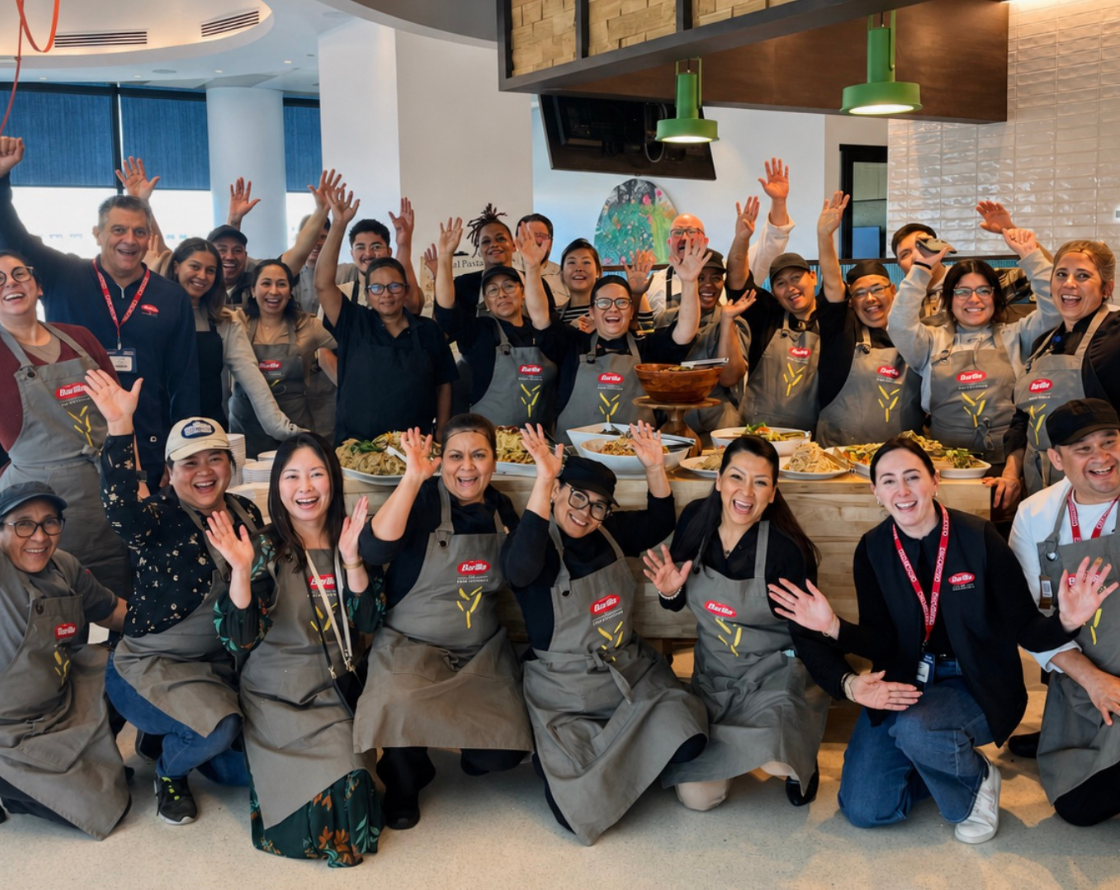
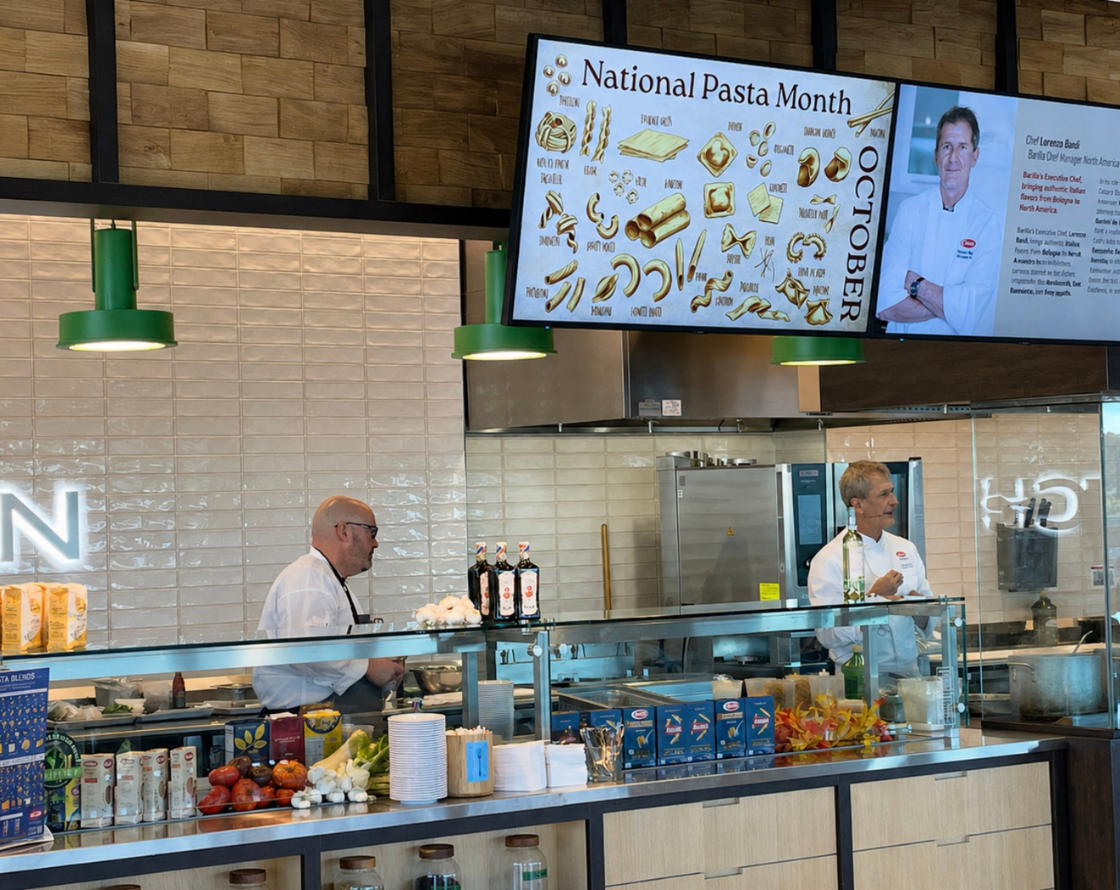
When Barilla came during National Pasta Month, Chef Lorenzo Boni spent a Thursday evening cooking with client associates and a full Friday with the culinary team. Both days mattered.
How Farm-to-Table Relationships Changed the Menu
The Lentil Board invited Chef Margaret to Saskatchewan, the largest lentil-growing region in the country, for a four-day farm-to-table immersion. She spent time with farmers, walked the fields at harvest, and learned the full arc of a pulse crop from the moment it comes out of the ground to the moment it lands in a kitchen. She returned understanding more than flavor and texture: the ingredient’s seasonality, its fragility, and the decisions growers make that shape what a chef eventually receives. That knowledge changed how she worked with it.
When the Walnut Board held their harvest event in Napa, she sent another chef from the team. He spent three days in the orchards alongside growers and came back with a new understanding of how light and temperature affect flavor development across a harvest season, and with ideas for the menu that no training day could have surfaced.
The Watermelon Board, after their training day, extended a farm immersion invitation to Florida.
The Real Measure of a Training Day
Chef Margaret's lentil granola is still on the menu. So are the hand-cut fries. That's the real measure of a training day, not the twenty events or the farm trips, but whether what got learned in a kitchen that day is still on a plate months later.
At quarterly client reviews, the LifeWorks culinary team serves a meal built from exactly that: dishes born in a training session, created by a culinary associate during a team challenge, refined, and then placed on a menu. Clients who joined these training days left talking about what it felt like to be in the room, the noise, the competition between tables, the pride when a dish they built made it onto a plate.
For the organizations that partner with LifeWorks, that curiosity translates directly into the dining room. Menus rotate with the season because the culinary team has a relationship with the ingredients behind them. Dishes carry a point of view because the chefs who developed them were taught to think past the obvious choice. Employees notice, and they come back.
Close to twenty events have taken place, with six more planned before the year is out. The invitation has been extended to LifeWorks culinary teams at other locations and to client associates through the teaching kitchen program.
Key Takeaways
- The chefs who walked lentil fields in Saskatchewan and walnut orchards in Napa came back with a relationship to an ingredient that a single training day could never teach, and it showed in the dishes they built next.
- Trade organizations show up because they want their ingredient in the hands of chefs who will develop it with intention. LifeWorks brings the team and the teaching kitchen. What comes out of that day stays on the menu.
- Menus that rotate with the season, dishes with a point of view, employees who come back because the food gives them a reason to. That is what happens when chefs learn an ingredient in the field and the kitchen, not just the classroom, and it is what separates a dining program that fills a space from one that shapes how people feel about coming to work.
--
At LifeWorks Restaurant Group, we turn bold ideas into refined hospitality experiences. Rooted in your culture and guided by a sophisticated perspective, we craft thoughtful, elevated experiences that leave a lasting impression. For organizations that treat food as a strategic amenity, that experience becomes the reason people come in, stay, and connect. Imagination Well Served.
Sign Up for News Alerts