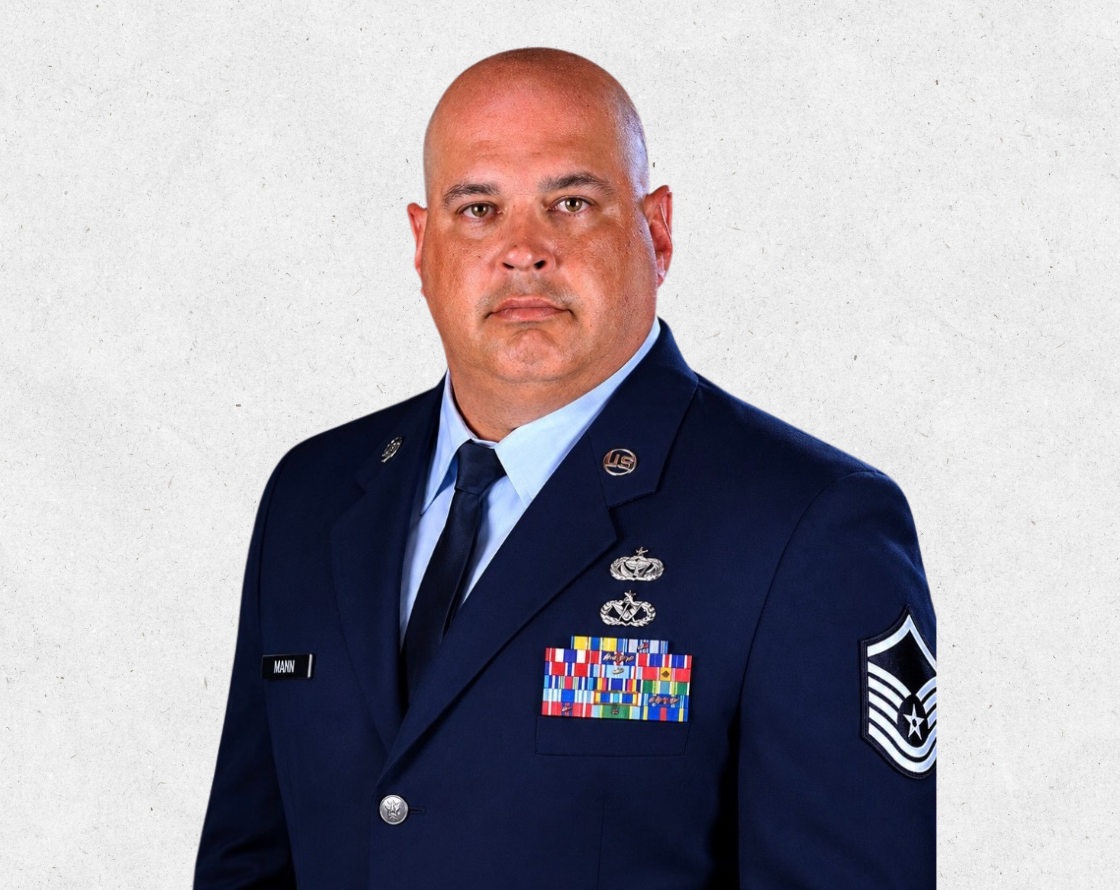
A conversation with Anthony Hutton, General Manager at Grand Forks Air Force Base and Aramark Salute Hospitality.
Anthony Hutton spent 21 years in the United States Air Force. First as a combat engineer, then as a dining facility manager overseeing the transition to the Air Force’s modernized dining program, Food 2.0 at Little Rock Air Force Base, one of the program's original six installations. He is a two-time recipient of the Hennessy Award, the Air Force's highest honor for dining facility excellence, earned once as a military program manager, and again as a Salute Hospitality General Manager. His teams post near-zero turnover with excellent operational performance that stands out across the portfolio. Here, he breaks down how.
You've operated this program from both sides of the contract, once as a military dining facility manager and now as a General Manager for Salute Hospitality. What does that dual perspective give you?
It gives me a shared language with every person at the table. When I sit down with military leadership, we're speaking the same language because I've lived this program from their side. I understand their priorities, their constraints, and what they're actually trying to accomplish. That shared understanding is where real partnership starts.
What it produces is clarity. Everyone knows what the program requires, what success looks like, and how we get there together. There's no gap between what the military expects and what we're delivering. The relationship sits on a common foundation.
It also makes me a better resource for the installations I support and the GMs I work alongside. I can bridge the conversation between Salute Hospitality and military leadership in a way that moves things forward. When both sides are working from the same understanding, the program runs cleaner, the relationship is stronger, and the service members we're there to support feel it every day.
You've maintained near-zero turnover across multiple installations. What's the foundation of that?
Transparency, from day one. When I bring someone on, I walk them through the entire operation. I introduce them to the team. I tell them exactly what's expected, the schedule, the standards, and how we operate. There are no surprises. People stay when they know what they signed up for and feel set up to succeed in it.
The other piece is knowing your people individually. A lot of leaders say they treat everyone equally. I treat people accordingly. You can be completely fair while still recognizing that different people need to be led differently. Some want ownership and creative input. Others need structure and direct guidance. Figure out which is which and lead them that way.
At Patrick Space Force Base, I had 31 civilian employees across five operations. Not one quit. Here at Grand Forks, I have the same hourly team I started with five years ago. That's not luck, it's the result of people knowing where they stand and feeling like their work matters.
How does inclusion factor into accountability on your teams?
Inclusion without ownership produces zero accountability. If you're going to bring an idea, you own it. We route it up, we test it, we work it together, but you own it. And zero accountability means zero consistency.
I tell my team: your performance is a reflection of two things, your character and your leadership. We all reflect on somebody. If you care about your character and the people leading you, you'll perform. I reciprocate that. I care about every person on this team, and they know it. That's the foundation.
"Inclusion without ownership produces zero accountability. If you're going to bring an idea, you own it."
How does team stability translate to operational outcomes for the client?
Consistency. When people have been doing this work together for years, they don't need to be managed through every shift. They own their stations. They know the standard. They execute it day in, day out because they've internalized it.
Our grab-and-go program here at Grand Forks has been recognized across the Salute Hospitality portfolio as consistently among the best. That does not happen with a rotating team. It happens when people take ownership, build on what they've learned, and hold each other to a standard.
For the Air Force and the service members coming through that door, what they get is reliability. They get a program that performs the same way on a Tuesday in January as it does on a Friday in July. In military dining, reliability is not a hospitality metric. It is a readiness input.
Salute Hospitality invests significantly in workforce development specifically with the culinary competitions and culinary and hospitality trainings. How do those programs connect to retention and performance?
They connect directly. When people develop real skills, they stay. When they feel like the organization is invested in them, they invest back. We develop people for this mission and for the next one whether that's advancing on base or carrying culinary skills into a career beyond military service.
Food 2.0 changed what it means to work in a military dining facility. Before the program, airmen were executing pre-packaged, process-driven food service. Now they're learning to cook from scratch, reading recipes, building techniques, working alongside a trained executive chef. These are tangible skills. They translate beyond the Air Force, and airmen know it.
The SHEF competition, Salute Hospitality Epicurean Face-Off, takes that development and puts it on display. Airmen compete with a mystery basket of ingredients, judged by wing and squadron leadership. It builds skill, confidence, and a culture where people take pride in what they produce.
Our proprietary RISE Above training in culinary and hospitality extends that standard across the entire team, customer service, conflict resolution, and consistent execution. I run it with my Aramark staff, my AbilityOne team, and the military airmen I work alongside. One standard. Everyone is accountable for it.
"We develop people for this mission and for the next one whether that's advancing on base or carrying culinary skills into a career beyond military service."
For military branches evaluating dining partners, what should they be looking for?
Look for a partner who understands the mission environment, not just food service. Anyone can manage a dining contract. Not everyone can build a program that strengthens readiness, develops the people working in it, and delivers consistent execution across years, not just inspection cycles.
Salute Hospitality built this program with the Air Force starting in 2010. Sixteen years of partnership, operational proof across dozens of installations, and a leadership team that goes out to the bases, sees the performers, and develops them. That's not a vendor relationship. That's a mission partnership.
The proof is in the people. Find a GM who knows the program, builds the team, and holds the standard. Everything else follows.
--
Anthony Hutton is General Manager at Aramark Salute Hospitality, Grand Forks Air Force Base. He served 21 years in the United States Air Force as a combat engineer and dining facility manager. He is a two-time recipient of the Hennessy Award, the Air Force's highest honor for dining facility excellence, earned as both a military program manager and a contractor General Manager.
Sign Up for News Alerts