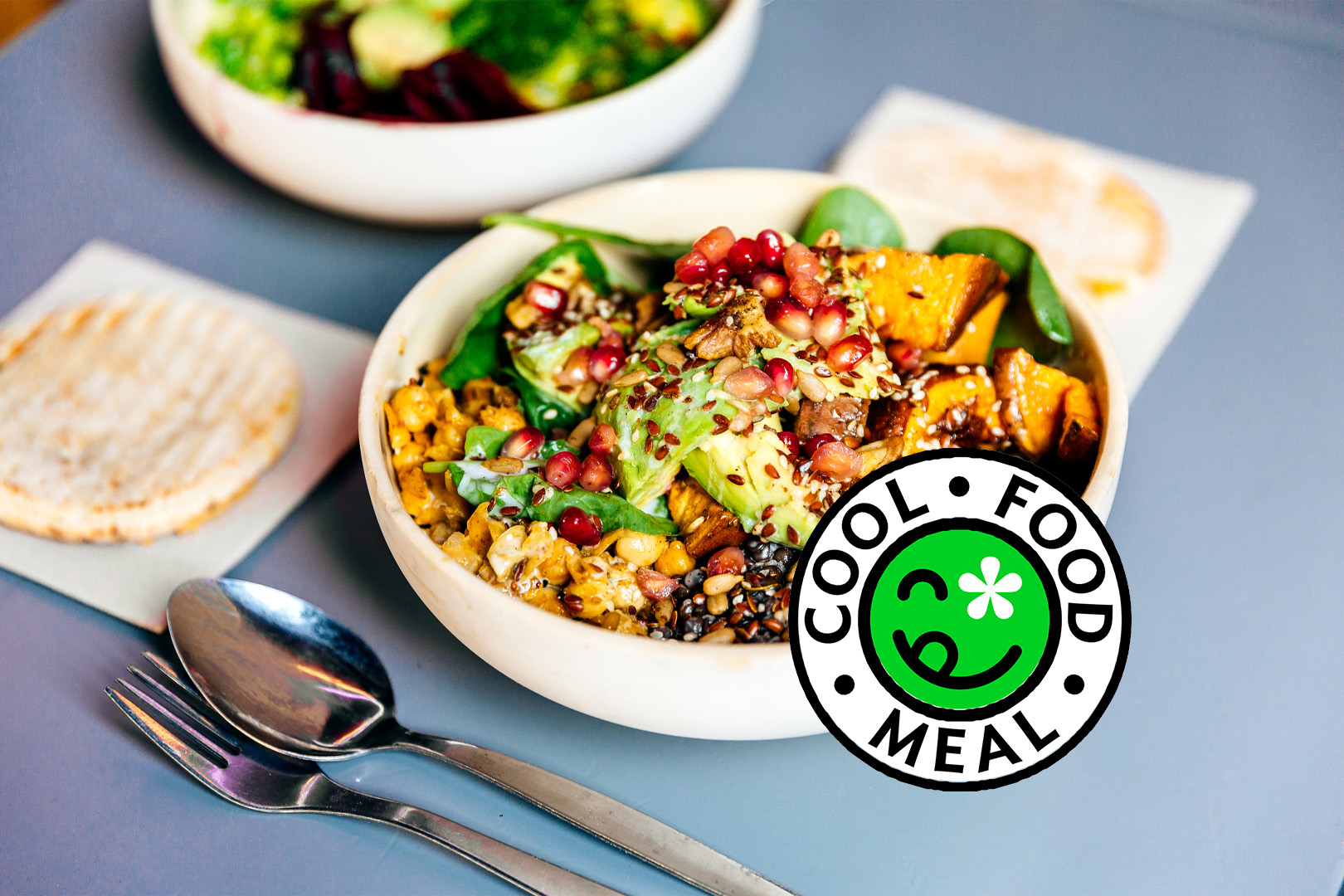
Shifting our diets is one of the most impactful ways to reduce our environmental footprint, as agriculture accounts for a quarter of the world’s greenhouse gas (GHG) emissions. For many consumers, the question is not one of desire or intent but of knowing what qualifies as a climate-friendly food or meal — so those decisions can become habit. In fact, 88% of consumers look to brands like ours to help them make those climate-conscious decisions.
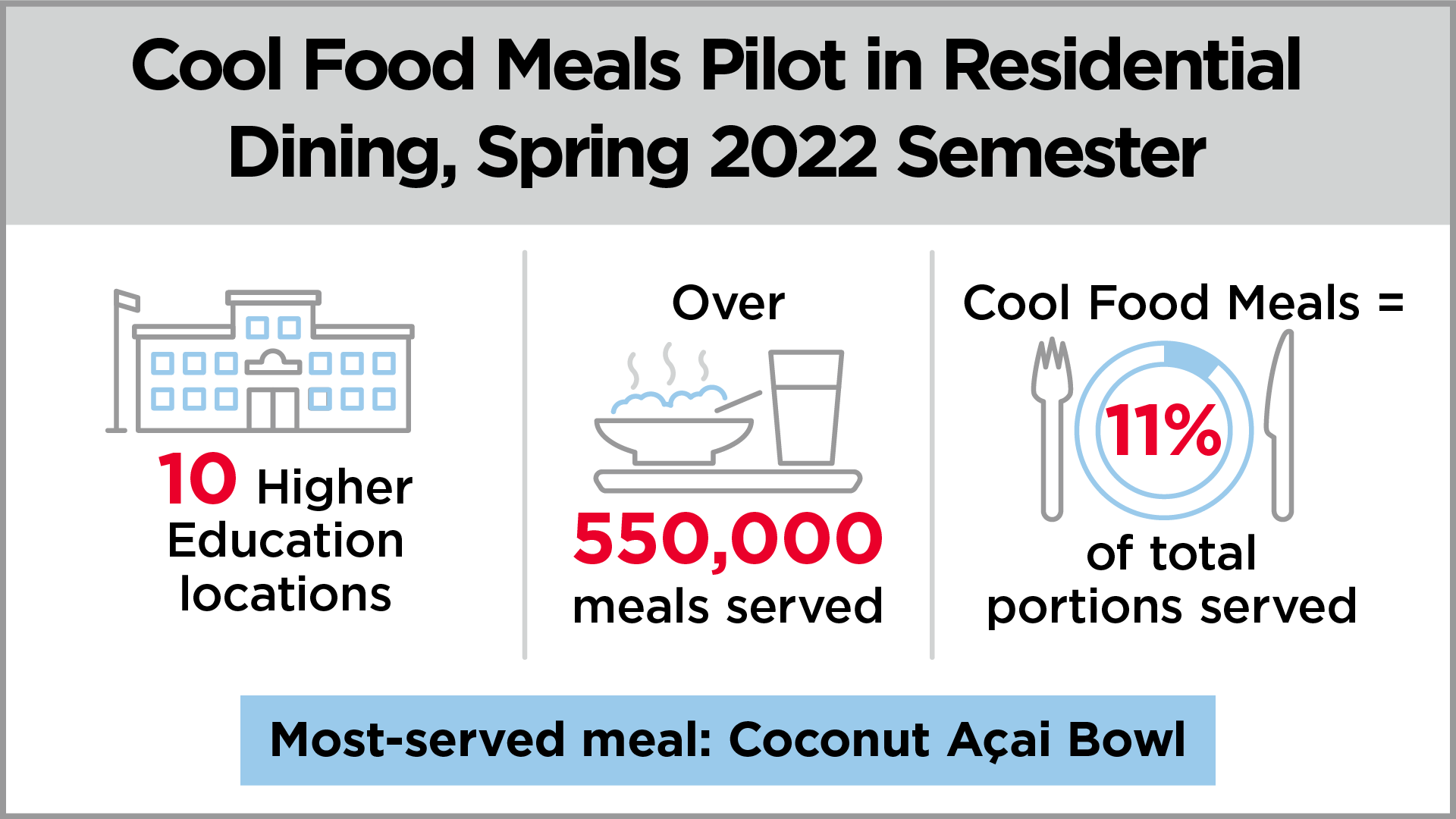
In October 2021 we became the first food service provider to adopt the Cool Food Meals badge, an initiative of the World Resources Institute (WRI) that helps companies identify and label meals that are better for the environment. In piloting Cool Food Meals at 10 U.S.-based universities this past spring, we empowered students and faculty to make climate-friendly dining choices.
The WRI partnership is poised to become a critical piece of our climate strategy as we pursue a net zero target in line with the Science-Based Target initiative’s Net Zero Standard and substantially reduce the emissions associated with the food we purchase and serve, our most significant source.
On June 13, we doubled down on this commitment by signing WRI’s Cool Food Pledge, committing to drastically reduce the GHG emissions associated with the food we serve in the U.S. by 25% by 2030. The pledge was coupled with the announcement that we would expand the availability of Cool Food Meals to nearly 1,500 U.S. locations in January 2023 — making it even easier for our guests to choose climate-friendly and plant-forward meals.
“It’s exciting to see Cool Food's collaboration with Aramark now extend to serving low carbon Cool Food Meals across all Aramark U.S. locations and the company’s commitment to reduce its food-related emissions by 25% by 2030 as part of the Cool Food Pledge,” says Edwina Hughes, Head of Cool Food at WRI. “These are two significant actions that will ensure Aramark tracks and reports its progress toward serving more sustainable and delicious climate-friendly meals.”
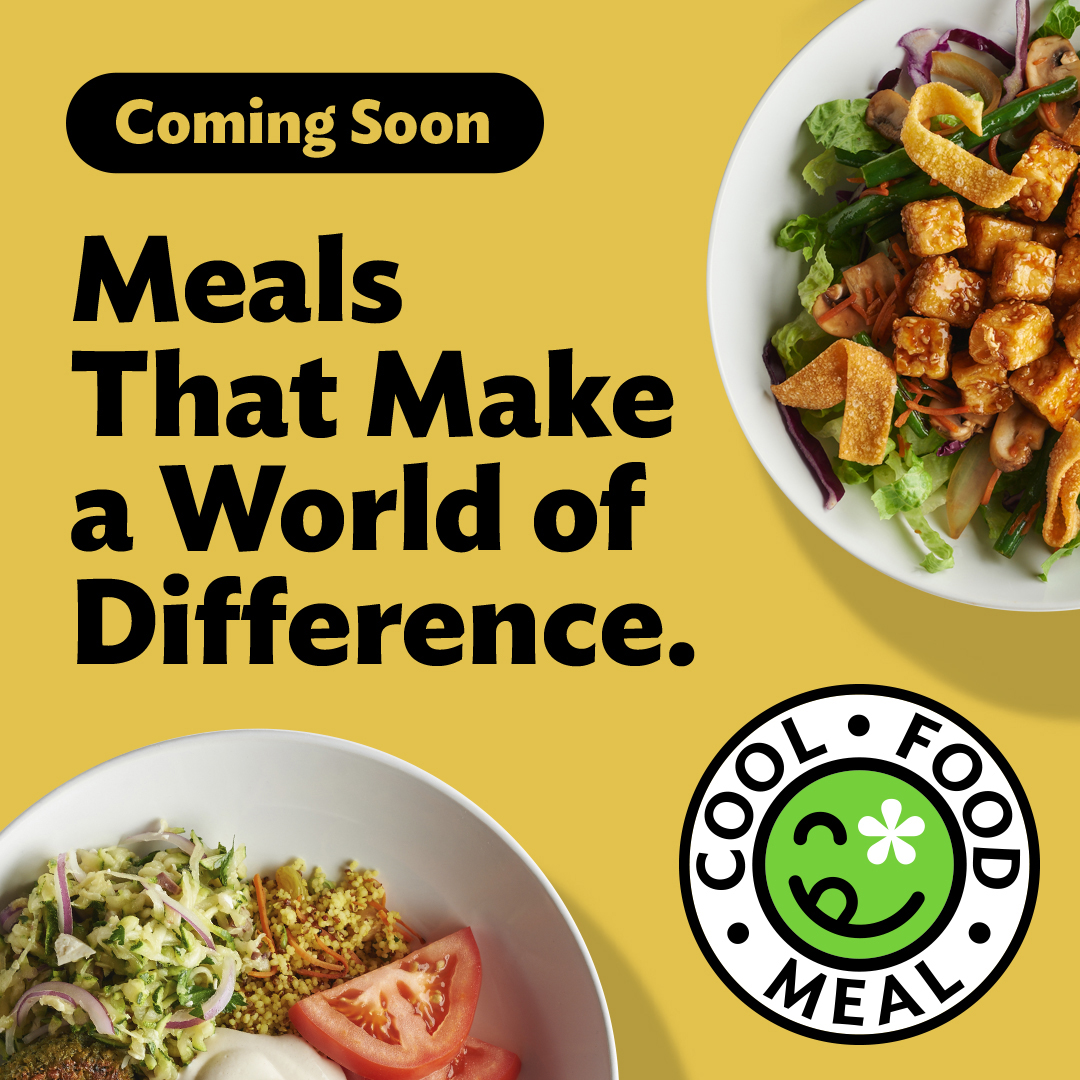
Digital signage like the graphic above educates guests about the hundreds of meals on our menus that meet the Cool Food Meals criteria.
“Cool Food Meals is a perfect way to align our mission as a hospitality company with our commitment to making a positive impact on people and the planet,” says Alan Horowitz, Vice President, Sustainability. “Our Higher Education pilot confirmed that the program resonates with our guests and supports their evolving dietary preferences and sense of environmental responsibility.”
A Setting for Change
Higher Education proved to be a fitting place to introduce Cool Food Meals. More than one-third of Gen Z adults say climate change is a top concern, and our own research shows 60% of consumers want to reduce their meat intake.
The University of Virginia (UVA) and the University of North Carolina (UNC) Wilmington were among the schools that eagerly joined the Cool Food Meals pilot for the spring 2022 semester. Caroline Baloga, Sustainability Manager at UVA, notes that colleges and universities are spaces ripe with curiosity and activism. “Sustainability has a big presence at UVA,” she says. “Cool Food Meals was a way to educate our students about the benefits of plant-forward eating while making it exciting for them.”
What’s more, students are highly motivated to help the environment through their daily habits and purchases. “With ours being a coastal school, it’s really a student priority to assess things for environmental friendliness, especially our carbon emissions on campus,” states Veda Lewin, Sustainability Coordinator at UNC Wilmington.
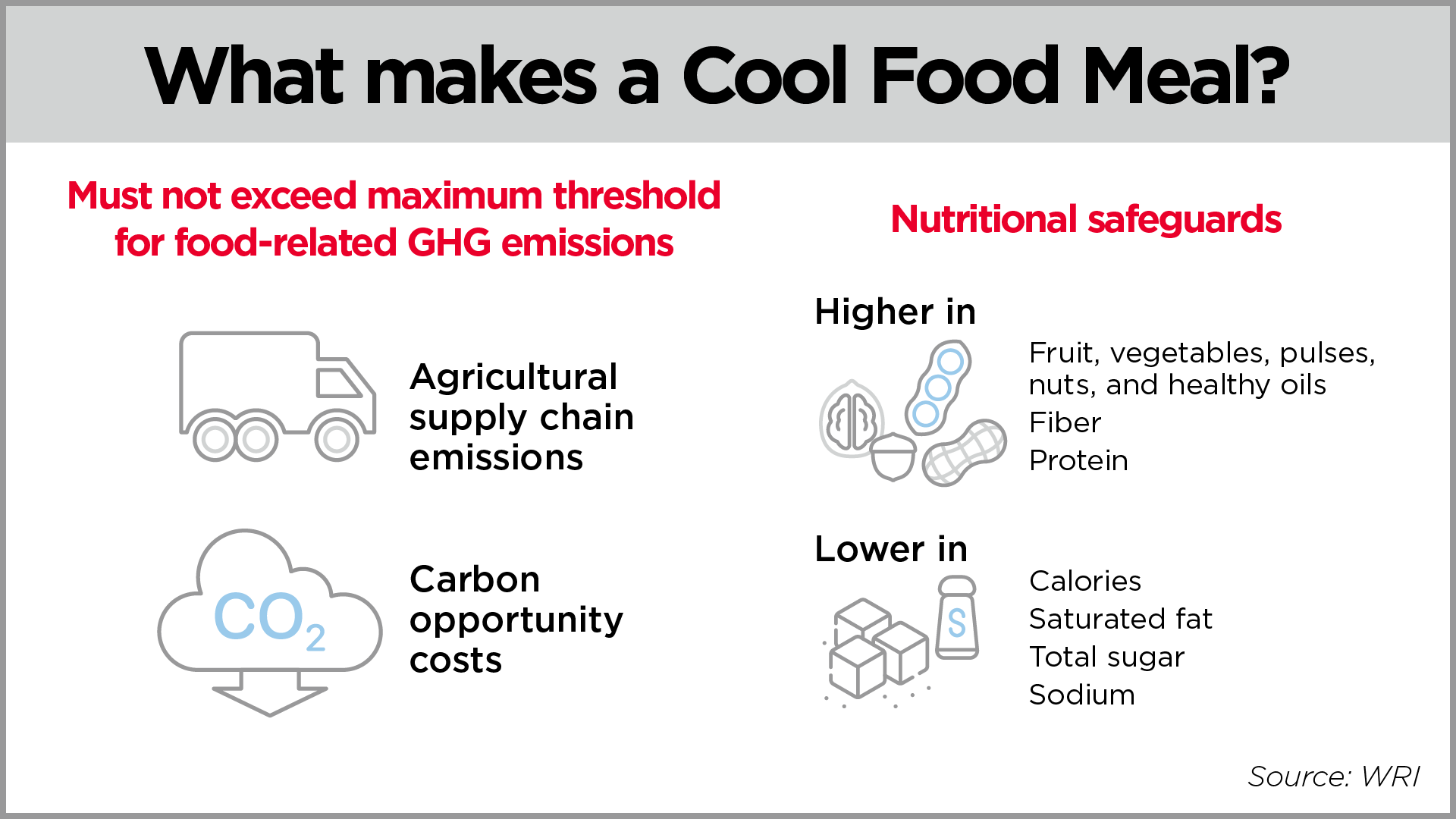
The Cool Food Meal per-meal threshold is based upon a maximum recommended daily carbon footprint for a person’s diet, which is 38% smaller than the current average, the level of change required by 2030 to help avoid the worst impacts of climate change.
To put the pilot into practice, WRI identified more than 350 items across our residential dining menus whose less resource-intensive ingredients (for example, using vegetables and legumes in place of meats like beef and lamb) met the program’s criteria. WRI also employs a nutritional safeguard to ensure the meals are as healthy as they are climate-friendly. Our credentialed Cool Food Meals cross all day parts and food categories, from soups and salads to sandwiches and pizza.
From there, the schools were given a robust toolkit for labeling the approved Cool Food Meals on menus across campus and for marketing them to students. As a starting point, we aimed for locations to serve at least one Cool Food Meal at all core stations during breakfast, lunch, and dinner. The recipes were already on our menus — the easily recognizable badge just gave students a new reason to try them.
“For Cool Food Meals to be successful, it was essential that students understand what the badge meant and how it connects to the things they’ve told us are important to them,” shares Kevin Maguire, Vice President, Retail Menu Strategy.
First Taste of Success
Five months later, Baloga and Lewin can speak to the ease of rolling out the program — and the positive response from students. First, there were the turnkey-yet-flexible marketing and educational materials provided by WRI. Our collaborative teams — from sustainability and marketing to culinary and operations — relied on those resources to learn about the program and formulate a strategy for executing the pilot at each campus.
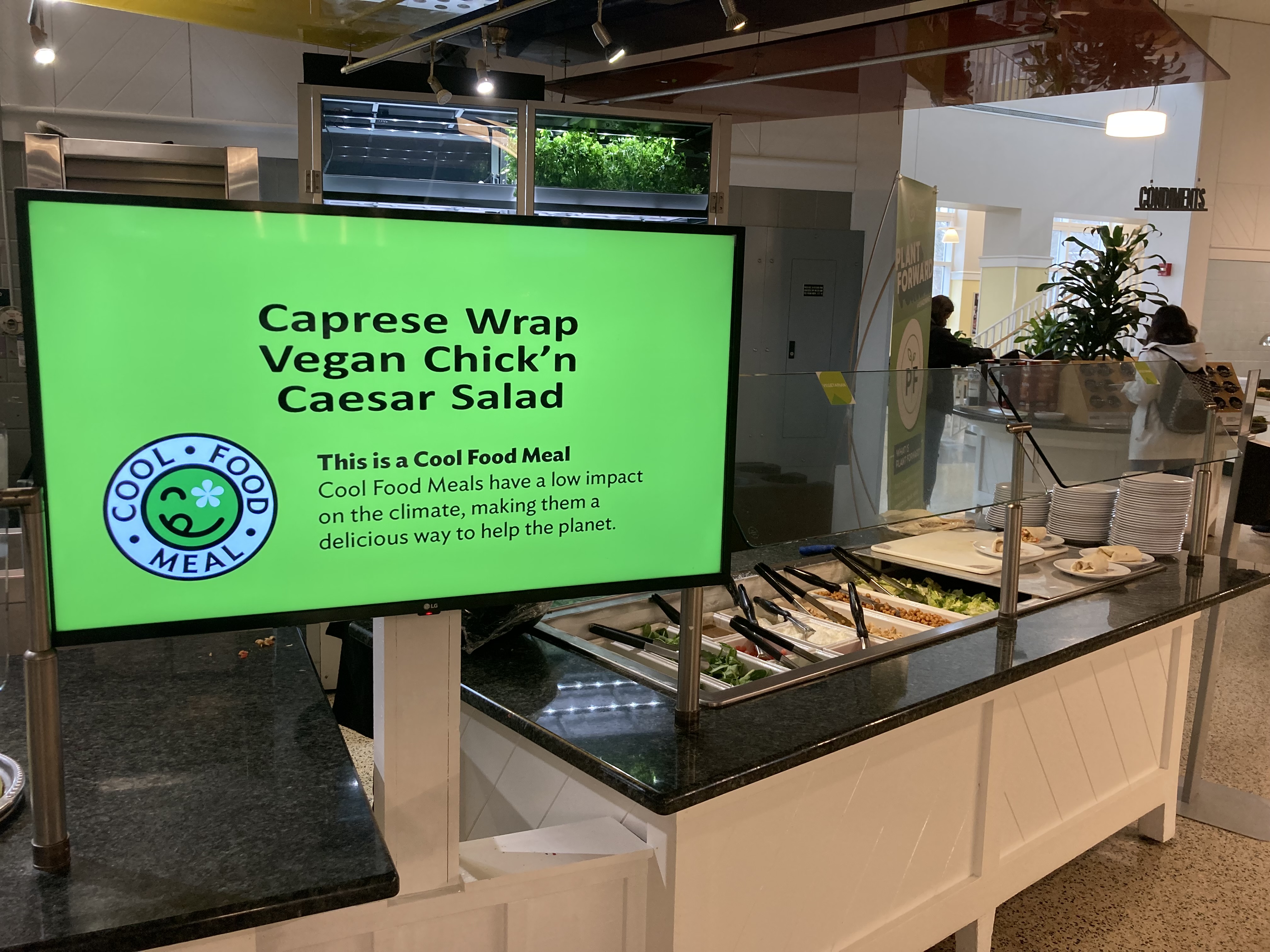
For the pilot, locations aimed to serve at least one Cool Food Meal at all core stations during breakfast, lunch, and dinner.
Over time, students came to learn the meaning of the Cool Food Meals badge, pointing them toward the dining hall choices that are best for the planet. The signage alone tended to generate interest and questions among students, faculty, and staff, providing many moments for education. “The Cool Food Meals designation makes climate-friendly eating a lot more accessible for people to participate,” says Baloga.
Want to see more like this?
Another ingredient for success was that the menu appealed to a wide range of eaters. Cool Food Meals include but are not limited to vegetarian and vegan options, as one might assume. Some dishes do, in fact, contain lower-impact animal protein like chicken and fish. “The program was inclusive of not only people who eat plant forward, but also anyone who wants more diversity in their diet,” says Lewin. “The students appreciated having all those options to make their low climate impact choice.”
By the end of the semester, which ran from early January to early May, the pilot campuses had served up over 550,000 Cool Food Meals, accounting for 11% of all portions served in their residential dining halls. The most-ordered dishes? Our Coconut Açai Bowl, Grilled Black Bean Burger, Mushroom & Onion Pizza, Penne with Summer Vegetables, and Linguine with Lemon-Garlic Shrimp.
Strong branding and marketing communications, a low barrier to participation, as well as the wealth of choice put students in a sustainability mindset — meal after meal, day after day. “Rather than taking things away from the menu, we were giving students more options. It’s an effective way to create behavior change for real impact,” Baloga notes.
Making a World of Difference
The Cool Food Meals pilot demonstrates that students are ready to enjoy foods with lower environmental impact — and we know consumer interest in sustainability extends well beyond college campuses. This fall, we will launch a second pilot at 15 Canadian universities plus additional U.S. colleges and universities. Come January, Cool Food Meals will extend to more than 1,000 menu items and be available to all U.S. Higher Education, Workplace Experience, and Healthcare+ accounts as part of our ongoing WRI partnership.
“We are excited to expand Cool Food Meals to as many clients and as many people as possible,” Maguire shares. “This program can be part of the dining solution for any company looking for new ways to reach their climate goals.”
Sustainability is a journey for us as a company, and the same is true for consumers. We will continue to test and offer ways that make it easier for our guests to do right by the planet.
“Food is the heart and soul of who we are, and we have opportunities to reduce the environmental footprint of that food,” adds Horowitz. “Programs like Cool Food Meals are going to create real impact for the people and businesses who are with us on this journey.”

