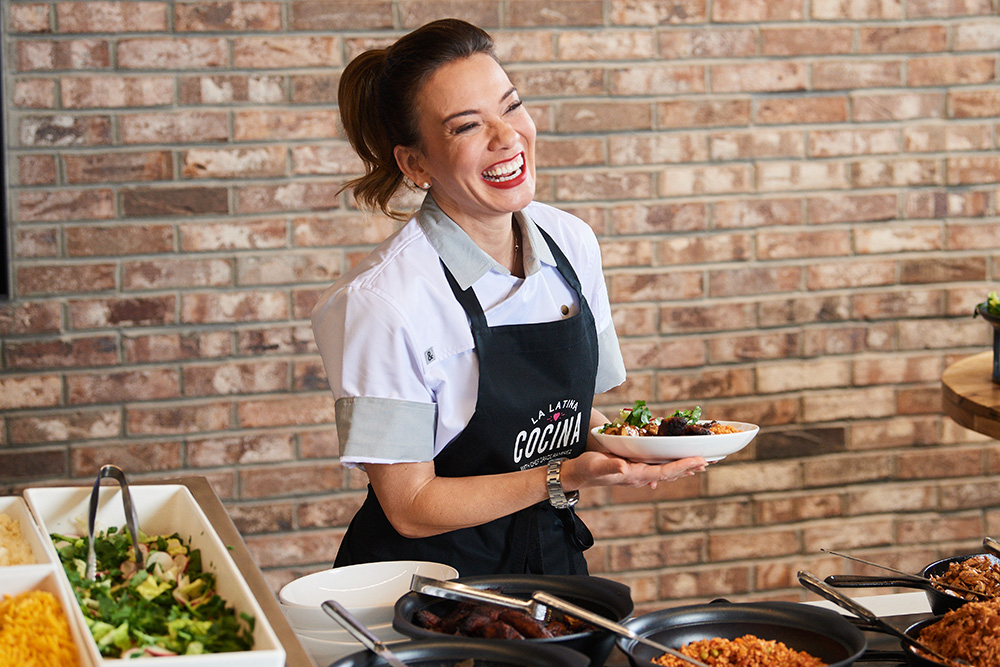
This past spring, we welcomed thousands of students into the kitchen of celebrity cookbook author, television personality, and philanthropist Grace Ramirez. “Chef Grace” is known for leveraging her diverse Latin heritage and the power of food to bring people together — and now she is the heart, soul, and face of La Latina Cocina.
This new partnership emerged from a desire to be more inclusive of Latinx/a/o students, the fastest-growing demographic at U.S. colleges and universities, while also meeting Generation Z’s demand for authentic, globally inspired cuisine. The residential dining concept was piloted at seven U.S. schools in spring 2022 and will roll out to 75 Aramark Collegiate Hospitality locations this fall.
We talked with Chef Grace to learn more about the origins of La Latina Cocina and how she hopes our collaboration will impact the next generation.

Q: La Latina Cocina is a true celebration of Latin American cuisine and culture. Can you tell us more about how it came to be?
The name itself combines the title of my first cookbook (La Latina) with cocina, which means “kitchen” in Spanish. In a Latinx/a/o household, that word carries a lot of weight. It’s not only where you cook and get fed, it’s the heart of the home. It’s our happy place, where you gather, where you feel the love of family.
When I was growing up, my grandmother and grandfather cooked for us every day, with the biggest meals on Sunday. There would be 12 or more of us, gathering at once — aunts, uncles, cousins, and so on. Later in my life, I started cooking because I missed my family and I wanted to recreate those memories.
So I think about college students who are away from home, eating in the dining hall every day and sharing those meals with friends. With La Latina Cocina, I wanted to transmit that same comforting feeling for them, and in the most authentic way possible. Our tagline, “Vive tu Sueño,” means “live your dream” — because I had always dreamt about impacting the lives of others through Latin food. I hope our guests come away feeling loved, nurtured, and happy.
Q: What will students find on the menu at La Latina Cocina?
La Latina Cocina’s menu draws on a wide range of flavors from Mexico, Venezuela, Argentina, and beyond. I call it “my Latin heart on a plate.” It’s delicious, it’s colorful, and it’s comforting.
We started with recipes from my cookbooks and used that as inspiration to create a new twist on Aramark’s existing ingredient and recipe database. Together, the chefs developed additional menu items that shared the same flavor profiles and connection to the culture. Many of the Aramark chefs are Latinx/a/o themselves or grew up around this kind of cuisine, and so they were able to bring all of their talents to this meaningful and deep collaboration.
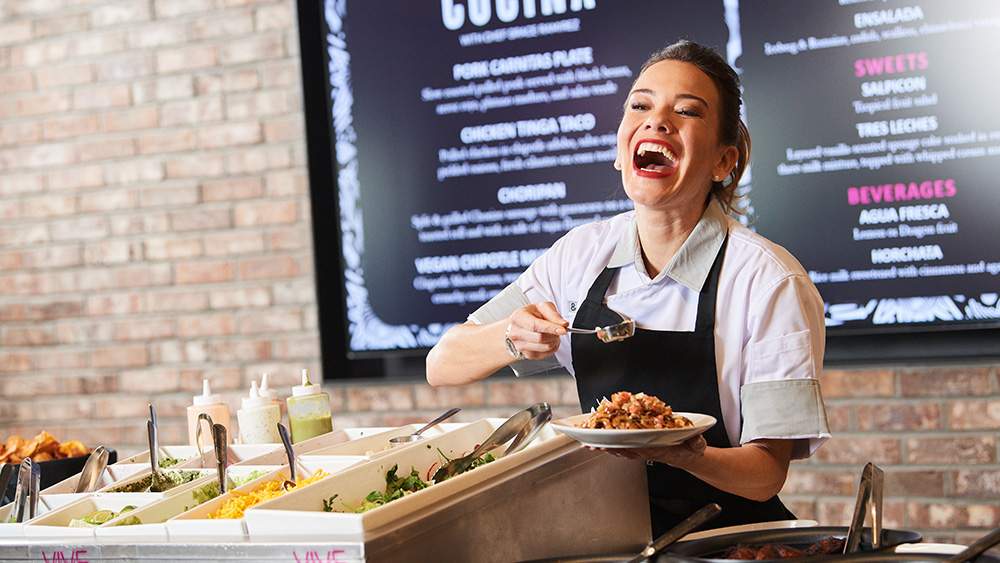
Miami-born and Venezuela-raised, Chef Grace Ramirez’s diverse Latin heritage was the inspiration for both her cookbook, La Latina, and our La Latina Cocina residential dining concept.
The menu might change from day to day, depending on the location and the station format, but guests will find carne mechada, tacos, tostadas, sides like rice, beans, plantains, and more. We offer meal suggestions, or you can build your own customized plates, bowls, salads, and sandwiches. We even have beverages, like Mango-Lemon Agua Fresca, and desserts, like Tres Leches Cake. We wanted it to be almost like a retail experience, where students could come enjoy a full meal — just like they would at home. And then they can come back the next day, choose new combinations, and have an entirely new experience.
Q: What do you want students to get out of dining at La Latina Cocina?
For students from Latinx/a/o backgrounds, I want La Latina Cocina to feel like home. I hope the flavors remind them of their grandmothers’ cooking. No matter where they come from, I want students to feel heard, loved, and represented through this food.
For students of other backgrounds, I hope they will try something new. They can start with the more familiar items — I mean, everyone loves tacos, right? Once that draws them in, they can try something different, like El Choripan (similar to a hot dog but with chorizo) or the Chipotle Mushroom Tostada, served on a cauli-tortilla. Or they can simply experiment with the salsas, like chimichurri from Argentina or guasacaca, a much-loved avocado-based salsa from Venezuela. Every time students dine with us, I hope they gain a little bit more of an understanding as to what Latin American food and culture is.
Want to see more like this?
Finally, I hope all guests will leave La Latina Cocina with a better appreciation of where their food comes from and how it’s prepared. That knowledge tends to drive people to eat healthier and waste less food.
Q: Representation is an important element of La Latina Cocina. Can you speak more to that?
This concept is about more than just the food. It is about celebrating Latin American food and culture — and yes, representation. I can’t stress enough how huge it is for a Latina woman in the culinary industry, like myself, to have been able to be part of this partnership. When Latinx/a/o students see my face on that poster, they can relate to that. And whether they want to become a chef or not, I hope La Latina Cocina inspires them to dream big — because when you see far, you go far. “Vive tu Sueño,” it all comes back to that.
Thanks to the beauty of social media, I hear the feedback straight from the students themselves. They send me their photos and messages, things like “This tastes just like my grandmother’s cooking!” and “Thank you for representing us.” One person even told me she cried when she saw our plantains, because it was the first time she’d had them since leaving home in Puerto Rico.
The Latinx/a/o community is no longer a small minority in this country. We are a growing force, full of talent and passion. All we need is opportunity. I’m grateful to the students for being vocal about what they want, and I’m thankful to companies like Aramark for listening to those voices.
Q: What was it like, working with Aramark? Did anything surprise you?
The first word that comes to mind is “teamwork.” It takes a village to cook. Even if you are cooking only for yourself, the farmers, the growers, the people who purchased the food are all in the kitchen with you.
So while I may have envisioned this concept, Aramark’s passionate team brings it to life every day. And they execute that vision proudly, with a lot of love for Latinx/a/o food and culture. It’s been a joy and a pleasure working with everyone.
Also, I was pleasantly surprised by how personal this work is to the Aramark chefs. In the La Latina Cocina pilot alone we served 70,000 entrees in six weeks — and when you cook in large volumes, it’s easy to lose perspective of who you’re cooking for. But the chefs I met at Aramark call the students their kids. That’s key, because of course I can’t be there in person to welcome and cook for our guests. The Aramark chefs are there to replicate the vision. And together, I feel we’ve created something really beautiful.
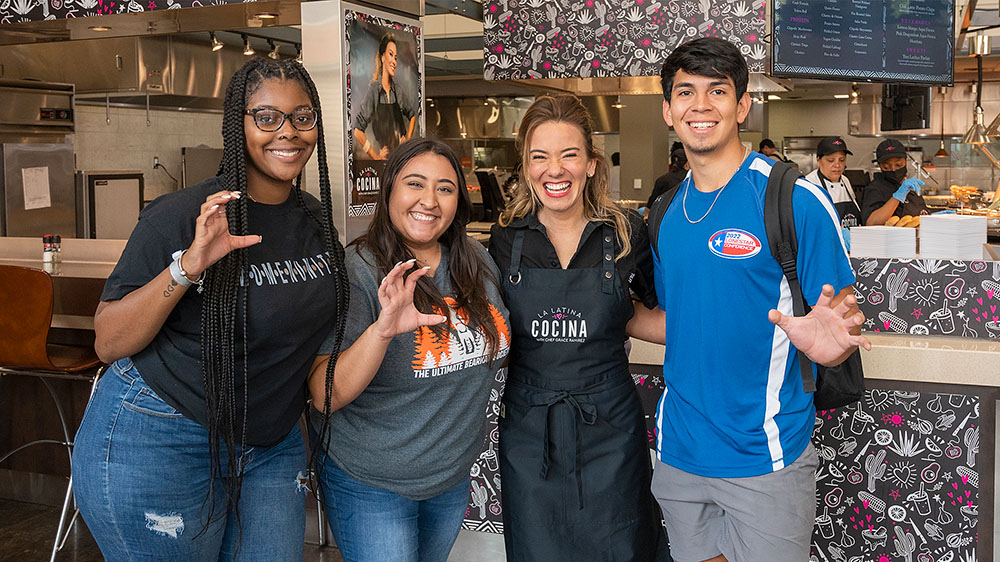
The love for La Latina Cocina has extended to social media, where students have shared their photos and their appreciation with Chef Grace.
Q: Switching gears, we wanted to learn more about your philanthropic work. What drives you to give back?
I’m involved in causes that are personally meaningful to me, from delivering disaster relief to promoting healthy eating for children to empowering women and minorities in the hospitality industry. For example, I was recently in Oaxaca, Mexico, where there was a category 2 hurricane. Over the course of 10 days, I helped distribute 90,000 pounds of food and 36,000 hot meals, sandwiches, and fruit to communities in need.
You see, I was born in Miami but grew up in a middle-class family in Venezuela. We had everything and we lost everything. I came back to this country with nothing. So I understand how you can have a plate of food one day and not have it the next day.
I feel lucky to be where I am now: working in this business, living in New York, traveling the world. But I struggled very hard to get here, and so it’s my social responsibility to give back — again, from a place of understanding.
I suppose I don’t know how to go through life without giving back. It keeps me grounded and humble. And it fuels the rest of my work, like my La Latina Cocina partnership with Aramark.
We extend our deepest thanks to Chef Grace Ramirez for sharing her story and for continuing to collaborate with us to bring authentic cuisine to colleges and universities nationwide. Learn more about Chef Grace and her work, inside and outside the kitchen.

